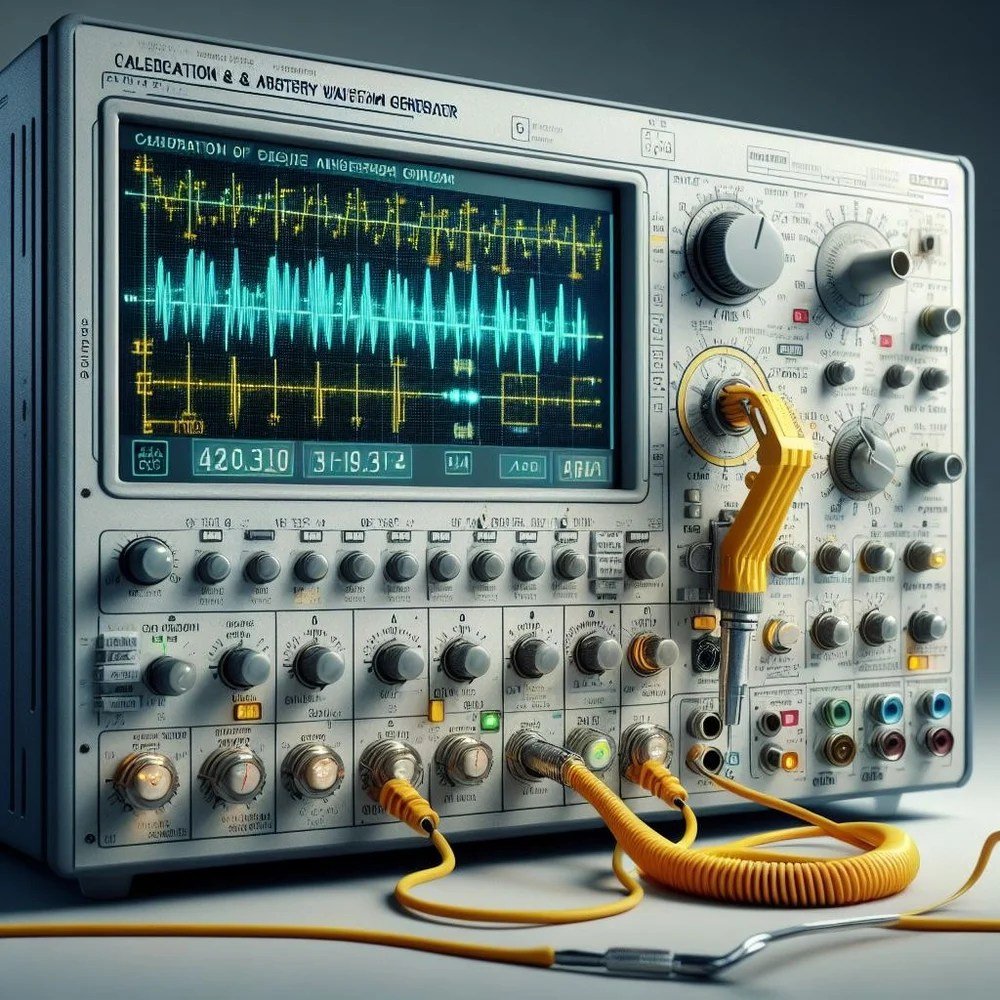
When you're dealing with delicate electronics, complex testing, or cutting-edge product development, the signals you generate are the foundation of your work. But what if those signals aren't quite what you think they are? The silent erosion of accuracy can lead to devastating consequences, from faulty designs and product recalls to costly compliance failures. That's why Waveform Generator Maintenance & Calibration isn't just a best practice—it's an absolute necessity for guaranteeing instrument accuracy and the integrity of your entire operation.
Think of your waveform generator as the heartbeat of your electronic testing environment. It creates the precise electrical signals—the sine waves, square waves, pulses, and arbitrary shapes—that you use to probe, stimulate, and validate other devices and systems. Without regular care, that heartbeat can become irregular, leading to unreliable results that can unravel your projects and reputation.
At a Glance: Why Waveform Generator Care Matters
- Ensures Accuracy: Guarantees your generated signals match their specified parameters.
- Prevents Errors: Avoids costly mistakes in design, testing, and manufacturing.
- Maintains Compliance: Meets industry standards (e.g., ISO/IEC 17025:2017, NIST traceability).
- Optimizes Performance: Keeps your equipment running at its peak efficiency.
- Extends Lifespan: Regular maintenance helps protect your investment.
- Reduces Downtime: Proactive care minimizes unexpected breakdowns and repairs.
- Improves Product Quality: Reliable testing leads to better, more dependable end products.
- Saves Money: Prevents costly rework, recalls, and potential legal issues down the line.
The Unseen Threat: Why Neglecting Your Waveform Generator Is a Risky Business
In a world driven by precision, even a minuscule deviation can have monumental effects. For anyone working with electronics, a waveform generator is a foundational tool, creating the very signals that define system behavior and test parameters. Whether you're analyzing complex signals, ensuring product quality, or developing next-generation systems, the accuracy of these signals is non-negotiable. If your instrument is drifting out of specification, it's not just a minor inconvenience; it's a direct threat to your data, your products, and your bottom line.
Consider a scenario: you're designing a critical medical device, and your waveform generator is providing the test signals. If its output frequency is off by a mere fraction, the device you're testing might pass your internal checks but fail in the field, potentially risking lives. Or perhaps you're in manufacturing, and an uncalibrated generator leads to a batch of products that don't meet quality standards, resulting in expensive recalls and damage to your brand. These aren't hypothetical anxieties; they are very real consequences that businesses face when they overlook proper instrument care.
Decoding the Powerhouse: What is a Waveform Generator?
Before diving deep into maintenance and calibration, it’s helpful to understand the instrument itself. At its core, a waveform generator is a piece of electronic test equipment used to generate various electrical waveforms over a wide range of frequencies. These signals can range from simple sine, square, and triangle waves to more complex pulse, ramp, noise, or even custom arbitrary waveforms. Engineers, technicians, and researchers rely on them daily for tasks such as:
- Circuit Testing: Injecting specific signals to evaluate circuit response.
- System Design & Validation: Simulating real-world conditions or stress-testing components.
- Sensor Emulation: Creating signals that mimic sensor outputs for testing control systems.
- Troubleshooting: Identifying issues by applying known good signals.
Basically, if you need a precise, controlled electrical signal, a waveform generator is your go-to. For a deeper dive into these versatile instruments, check out our waveform generator overview.
The Core Pillars of Longevity: Maintenance vs. Calibration
While often discussed together, "maintenance" and "calibration" are distinct but complementary processes. Understanding their differences is key to a comprehensive care strategy.
What is Waveform Generator Maintenance?
Maintenance refers to the routine, preventative care you perform to keep your instrument in good working order. It's about preserving functionality and preventing problems before they start. Think of it like changing the oil in your car—it keeps things running smoothly and prevents larger, more expensive issues down the road.
Typical Maintenance Tasks Include:
- Physical Inspection: Checking for visible damage, loose connections, or environmental wear.
- Cleaning: Removing dust, debris, and spills from external surfaces, vents, and connectors. Accumulated dust can lead to overheating and component failure.
- Software/Firmware Updates: Ensuring the instrument's operating system and internal programs are current, often addressing bugs, improving performance, or adding features.
- Functional Checks: Basic operational tests to confirm the instrument powers on, responds to controls, and produces a signal (even if its accuracy isn't yet verified).
- Cable and Connector Integrity: Inspecting and cleaning input/output connectors and associated cables for wear or damage that could degrade signal quality.
Regular maintenance helps extend the life of your waveform generator, reduces the likelihood of unexpected failures, and ensures a clean, safe working environment.
What is Waveform Generator Calibration?
Calibration, on the other hand, is a precise, metrological process of verifying and, if necessary, adjusting your waveform generator's output against known, highly accurate standards. The goal is to ensure that the signals it says it's producing are indeed the signals it is producing, within specified tolerance limits. It's a critical audit of your instrument's accuracy.
The Calibration Process Typically Involves:
- Verification: A qualified technician connects your waveform generator to reference standards (known as "calibrators") that are many times more accurate than the instrument being tested. They measure various parameters—frequency, amplitude, offset, rise/fall times, waveform fidelity—and compare these readings to the manufacturer's specifications.
- Adjustment (If Necessary): If the instrument's performance falls outside the acceptable tolerance, the technician will make internal adjustments (often software-driven, sometimes hardware-based) to bring its output back into specification.
- Post-Adjustment Verification: After any adjustments, the instrument is re-verified against the standards to confirm it's now performing accurately.
- Documentation: A calibration certificate is issued, detailing the "as found" and "as left" readings, the standards used, the technician's name, and the date of calibration. This certificate is crucial for traceability and compliance.
Crucially, reputable calibration services, like those offered by ACS Calibration and Micro Precision, adhere to stringent standards such as ISO/IEC 17025:2017. This accreditation signifies that the calibration lab operates a robust quality management system and is technically competent to perform specific types of calibrations. Additionally, their standards are NIST traceable, meaning their accuracy can be linked back to national and international measurement standards, providing an unbroken chain of comparison.
The "When" and "Why": Determining Your Calibration Schedule
There's no one-size-fits-all answer for how often to calibrate your waveform generator, but several factors will guide your decision:
- Manufacturer Recommendations: Always check the instrument's manual. Manufacturers typically provide a recommended calibration interval (e.g., annually).
- Usage Frequency and Intensity: An instrument used daily in critical applications will likely need more frequent calibration than one used sparingly for non-critical tasks.
- Environmental Conditions: Harsh environments (extreme temperatures, humidity, vibration, dust, electromagnetic interference) can accelerate drift and necessitate more frequent calibration.
- Criticality of Measurements: If the accuracy of your waveform generator directly impacts product safety, regulatory compliance, or high-value decisions, opt for shorter calibration intervals.
- Industry Standards and Regulations: Many industries have specific compliance requirements that dictate calibration frequency (e.g., aerospace, medical, automotive). ISO/IEC 17025 standards often require documented calibration schedules.
- Prior Calibration History: If an instrument consistently drifts out of specification quickly, you might shorten its interval. Conversely, if it always remains well within tolerance, you might extend it slightly (with careful risk assessment).
- After Repair or Service: Any significant repair or internal adjustment warrants a full calibration to ensure the instrument is performing correctly post-service.
- Before a Critical Project: For projects where absolute accuracy is paramount, consider a "pre-project" calibration, even if it's not yet due according to your schedule.
A good starting point is annual calibration, but be prepared to adjust based on the factors above. Documenting your decision-making process is as important as the schedule itself.
Navigating the Calibration Process: What Happens "Behind the Scenes"
When you send your waveform generator for calibration, or have a technician visit your site, a detailed sequence of events unfolds to ensure its accuracy.
- Initial Assessment & Functional Test:
- The instrument is powered on, and a visual inspection checks for any obvious physical damage, loose components, or signs of environmental stress.
- Basic self-tests or functional checks are run to ensure the unit is operating as expected before more precise measurements begin.
- "As Found" Measurements (Verification):
- This is the critical first step where the technician connects the waveform generator to their highly accurate reference standards.
- They systematically measure key parameters across the instrument's operating range:
- Frequency Accuracy: Is 10 MHz truly 10 MHz?
- Amplitude Accuracy: Is 1V peak-to-peak actually 1V?
- DC Offset: Is the baseline voltage correct?
- Waveform Fidelity: For square waves, are rise/fall times within spec? For sine waves, is harmonic distortion acceptable?
- Modulation Accuracy: If applicable, are modulation parameters precise?
- All "as found" readings are meticulously recorded. If any parameter is outside the manufacturer's specified tolerance, it's noted as a "fail." This step is crucial for understanding the instrument's performance prior to any adjustments.
- Adjustment and Optimization (If Needed):
- If the "as found" readings indicate the instrument is out of tolerance, the technician uses specialized software and/or internal calibration procedures to adjust the waveform generator. The goal is to bring all parameters back within the manufacturer's specified range.
- This process often involves connecting to a service port, running proprietary software routines, and performing iterative adjustments while monitoring the output with the reference standards.
- "As Left" Measurements (Post-Adjustment Verification):
- After any adjustments, the entire verification process is repeated. These "as left" readings confirm that the instrument is now performing accurately and within specification.
- Even if no adjustments were needed (meaning the "as found" readings were already within tolerance), "as left" readings are still recorded to demonstrate the instrument's accuracy at the time of calibration.
- Documentation and Certification:
- This is where the rubber meets the road for compliance and traceability. A comprehensive calibration certificate is generated. This certificate typically includes:
- Instrument Details: Model, serial number, asset ID.
- Calibration Date & Due Date: When it was performed and when the next one is due.
- "As Found" & "As Left" Data: A detailed table of all measurements and their respective tolerances.
- Standards Used: Identification of the reference equipment, including their calibration dates and traceability to NIST or other national standards.
- Accreditation Information: Confirmation of ISO/IEC 17025:2017 accreditation (if applicable).
- Environmental Conditions: Temperature, humidity during calibration.
- Technician & Lab Information: Who performed it and where.
- Many providers, like ACS Calibration, use advanced software like Fluke MET/TEAM for comprehensive calibration and asset management, allowing clients to access certificates online and receive due date reminders. This documentation is your proof of accuracy and vital for audits.
On-Site vs. Lab Calibration: Deciding What's Best for You
When it comes to getting your waveform generator calibrated, you generally have two main options, each with its own set of advantages:
Lab Calibration
This is the traditional method where you ship your instrument to a dedicated calibration laboratory.
Pros:
- Optimal Environment: Labs are designed for metrology, often featuring climate-controlled environments, specialized anti-vibration tables, and robust power supplies to ensure the most stable and accurate measurements.
- Specialized Equipment: Calibration labs typically house a wider array of highly accurate reference standards and specialized test fixtures that might not be practical for mobile setups.
- Complex Repairs: If your instrument requires extensive repairs or internal component replacement beyond simple adjustments, a lab environment is usually better equipped to handle it.
- Cost-Effective for Individual Units: If you only have a few instruments and can manage the shipping logistics, lab calibration can sometimes be more economical per unit than an on-site visit.
Cons: - Downtime: Your instrument is unavailable during shipping and while it's at the lab, which can impact your operations.
- Shipping Costs & Risks: You incur shipping costs, and there's always a risk of damage during transit, requiring careful packaging.
- Logistics: Managing shipping, tracking, and customs (if international) can be cumbersome.
On-Site Calibration
With on-site calibration, a qualified technician brings the necessary reference standards and equipment directly to your facility.
Pros:
- Reduced Downtime: Your instruments remain in your facility and can often be returned to service much faster, minimizing disruption to your workflow.
- Eliminates Shipping: No packaging, shipping costs, or risk of transit damage.
- Ideal for Large or Sensitive Instruments: Perfect for equipment that is difficult to move, integrated into a larger system, or particularly sensitive to transport.
- Convenience: The calibration process is tailored to your schedule and location, including during off-hours to prevent operational impact.
- Contextual Understanding: Technicians can observe the instrument in its actual operating environment, potentially aiding in diagnostics or advising on best practices specific to your setup.
- Documentation for Asset Management: On-site services still provide full documentation, including for third-party instruments, crucial for your asset management systems.
Cons: - Cost for Few Units: For a very small number of instruments, the cost of an on-site visit might be higher than shipping them to a lab.
- Limited Repair Capability: While minor adjustments and some repairs can be done on-site, extensive repairs or those requiring specialized lab equipment might still necessitate a trip back to the lab.
- Environmental Challenges: The technician works in your environment, which might not be as controlled as a dedicated lab, though mobile setups are designed to compensate.
Making the Choice:
If you have multiple instruments, critical equipment that cannot leave your facility, or operations where downtime is extremely costly, on-site calibration (as offered by companies like ACS Calibration) is often the superior choice. For individual, easily transportable instruments, a lab calibration might be more practical. Many businesses opt for a hybrid approach, sending smaller, less critical items to the lab and arranging on-site visits for their larger or mission-critical waveform generators.
Partnering for Precision: Choosing the Right Calibration Service
Selecting a calibration partner is one of the most important decisions you'll make for your waveform generators. Not all calibration services are created equal. Here’s what to look for:
- Accreditation and Traceability:
- ISO/IEC 17025:2017 Accreditation: This is the gold standard for calibration laboratories. It proves that the lab is technically competent to perform specific calibrations and operates a rigorous quality management system. Always ask to see their scope of accreditation, which lists the specific instruments and parameters they are accredited to calibrate.
- NIST Traceability: Ensure their reference standards are traceable to the National Institute of Standards and Technology (NIST) or other recognized national metrology institutes. This ensures that their measurements can be linked back to fundamental physical constants, providing an unbroken chain of accuracy.
- Breadth of Services:
- Does the provider offer just calibration, or do they also provide related services like maintenance, repair, and even sales of new or refurbished equipment? Comprehensive providers, such as Micro Precision, can be a one-stop shop, simplifying your vendor management.
- Do they handle a wide range of manufacturers and models of waveform generators? Expertise across diverse equipment is a significant plus.
- Technical Expertise and Procedures:
- Look for providers with deep expertise in electrical metrology, specifically for waveform generators.
- Do they use OEM (Original Equipment Manufacturer), military standard, internally developed, or custom-designed procedures? Flexibility to accommodate unique client requests or specialized instruments is a mark of a seasoned provider.
- Ask about their technicians' qualifications and ongoing training.
- Turnaround Time and Flexibility:
- What are their typical turnaround times for lab calibration? Do they offer expedited services if needed?
- For on-site services, how quickly can they schedule a visit? Do they accommodate off-hours or weekend calibrations to minimize your operational impact? Companies like ACS Calibration pride themselves on quick turnaround times and flexibility.
- Documentation and Asset Management:
- Beyond just the calibration certificate, what kind of asset management support do they offer?
- Do they provide robust documentation that can integrate with your internal systems?
- Look for providers using advanced software (e.g., Fluke MET/TEAM) that offers features like:
- Comprehensive data for all your instruments, even third-party ones.
- Automated email due date reports.
- Secure online access to calibration certificates.
- Audit support, providing the data you need for compliance checks.
- Customer Support and Reputation:
- How responsive are they to inquiries? Do they offer free audit support?
- Check reviews, testimonials, and ask for references. A long history of satisfied clients (like Micro Precision's decades of experience) is a strong indicator of reliability and quality.
By thoroughly vetting potential partners against these criteria, you can ensure your waveform generators receive the highest level of care, safeguarding your investment and the integrity of your work.
DIY Maintenance: What You Can (and Absolutely Shouldn't) Do
While professional calibration is essential, there are proactive steps you can take in-house to maintain your waveform generator and extend its life. This DIY maintenance focuses on external care and software upkeep, not on internal adjustments or metrological verification.
Your Role in Routine Maintenance:
- Keep it Clean: Regularly wipe down the instrument's exterior with a soft, lint-free cloth. Use a mild, non-abrasive cleaner if necessary (check the manufacturer's guidelines). Pay attention to ventilation slots—use compressed air to gently clear dust buildup, preventing overheating.
- Inspect Cables and Connectors: Before and after each use, check BNC or other signal cables for fraying, bent pins, or damaged insulation. Ensure connectors are clean and tight. Poor cables are a frequent culprit for signal integrity issues.
- Power Down Properly: Always follow manufacturer guidelines for powering off your instrument. Sudden power interruptions can sometimes corrupt firmware or lead to component stress.
- Software and Firmware Updates: Periodically check the manufacturer's website for firmware updates. These often fix bugs, improve performance, or add new features. Follow their instructions precisely for installation.
- Environmental Awareness: Ensure your waveform generator operates in a stable environment, within specified temperature and humidity ranges. Protect it from spills, excessive dust, and strong electromagnetic fields.
- Secure Placement: Make sure the instrument is on a stable surface, away from sources of vibration. If rack-mounted, ensure it's properly secured.
What You Should Never Do Yourself:
- Internal Adjustments: Do not open the instrument's case to attempt any internal adjustments, even if you find service manuals online. These procedures require specialized tools, highly accurate reference standards, and expertise to avoid damaging the delicate circuitry or introducing further inaccuracies.
- Calibration (Metrological Verification): Unless you are a certified metrology technician with NIST-traceable standards and ISO/IEC 17025 accreditation, you cannot "calibrate" your own instrument. Your functional tests might tell you if it's working, but not if it's accurate to a verified standard.
- Complex Repairs: If the instrument experiences a significant malfunction (e.g., no output, erratic behavior, error codes), do not attempt complex component-level repairs. This is best left to professional repair services who have the diagnostic tools and spare parts. Many calibration labs also offer repair services.
Your DIY efforts should focus on preventative care and cleanliness. For anything involving the internal workings or verification of accuracy against standards, trust the professionals.
Common Misconceptions About Waveform Generator Calibration
There are several persistent myths that can lead to complacency or incorrect decisions regarding your waveform generators. Let's debunk a few:
"It works fine, so it doesn't need calibration."
This is perhaps the most dangerous misconception. Instruments rarely fail catastrophically and suddenly. Instead, they drift out of specification slowly over time due to component aging, environmental stress, and normal wear and tear. This drift is often imperceptible to the user but can introduce significant errors into your measurements. A waveform generator can appear to be "working" perfectly, providing a signal, but that signal might be off by 5% in amplitude or 0.1% in frequency—enough to invalidate your entire project. Calibration catches this drift before it becomes a problem.
"Calibration is just for compliance or audits."
While calibration is absolutely crucial for meeting regulatory requirements (e.g., ISO 9001, industry-specific standards) and passing audits, its primary benefit is ensuring the reliability and quality of your work. Compliance is a byproduct of good metrology, not its sole purpose. Accurate instruments lead to accurate data, which leads to better designs, more reliable products, and fewer costly mistakes. Think of compliance as a checkpoint along the path of quality, not the destination itself.
"All calibration services are the same."
As discussed, this couldn't be further from the truth. The level of accreditation, traceability of standards, technical expertise, scope of services, and quality of documentation can vary dramatically. Choosing a cut-rate provider who lacks ISO/IEC 17025 accreditation and NIST traceability is akin to having your car's brakes serviced by someone without proper tools or training—it might seem cheaper upfront, but the long-term risks are unacceptable. The quality of your calibration directly impacts the quality of your measurements.
"If it's a new instrument, it's accurate for years."
New instruments come with a manufacturer's calibration, but this doesn't guarantee accuracy indefinitely. The manufacturer's recommended calibration interval (often one year) starts from the date of manufacture or purchase, whichever is specified. Components still age, and environmental factors still apply. Treat your new instrument with the same respect for calibration as your older ones.
The Undeniable ROI: Why Investing in Accuracy Pays Off
While maintenance and calibration costs are a line item in any budget, viewing them as an expense rather than an investment misses the bigger picture. The return on investment (ROI) from rigorously maintaining and calibrating your waveform generators is substantial and often underestimated.
- Avoidance of Costly Rework and Recalls: Imagine designing a product based on faulty signals. The cost of identifying the error, redesigning, retesting, and potentially recalling products from the market can be astronomical. Accurate instruments mitigate this risk significantly.
- Improved Product Quality and Reputation: Consistently producing high-quality products built on reliable data enhances your brand's reputation, fostering customer loyalty and competitive advantage.
- Reduced Long-Term Costs: Proactive maintenance prevents major breakdowns, extending the lifespan of expensive equipment. Calibration helps identify drift early, preventing minor issues from escalating into expensive repairs.
- Enhanced Operational Efficiency: Fewer unexpected equipment failures mean less downtime, allowing your teams to work uninterrupted and meet project deadlines more consistently.
- Seamless Compliance: Passing audits with flying colors avoids fines, legal issues, and the administrative burden of corrective actions. It demonstrates a commitment to quality that resonates with regulators and partners.
- Data Integrity and Confidence: When your instruments are calibrated, you can trust your data. This confidence empowers engineers and researchers to make critical decisions without second-guessing their measurements, accelerating innovation and development.
In essence, investing in waveform generator maintenance and calibration is investing in the foundation of your technical operations. It's an investment in accuracy, quality, compliance, and ultimately, your organization's success.
Your Next Steps for Peak Waveform Generator Performance
The path to guaranteed accuracy for your waveform generators is clear. Don't leave the reliability of your critical instruments to chance.
- Audit Your Inventory: Start by listing all your waveform generators. Note their model numbers, serial numbers, last calibration dates, and manufacturer-recommended intervals.
- Assess Criticality: For each instrument, determine how critical its accuracy is to your operations, safety, and compliance. This will help prioritize calibration schedules.
- Review Manufacturer Guidelines: Consult the manuals for recommended maintenance and calibration schedules.
- Implement a Maintenance Schedule: Establish an internal routine for cleaning, visual inspections, and software updates. Assign responsibility for these tasks.
- Select a Trusted Calibration Partner: Based on the criteria outlined above (ISO/IEC 17025, NIST traceability, comprehensive services), choose a reputable calibration provider. If you're weighing options, consider whether on-site or lab calibration best suits your needs, especially for high-value or numerous instruments.
- Schedule Calibrations: Get your instruments on a regular calibration schedule. If an instrument is past due, prioritize its calibration immediately.
- Leverage Asset Management: Utilize the asset management features offered by your calibration provider (like online certificates and due date reminders) to simplify tracking and ensure timely recalibrations.
- Educate Your Team: Ensure everyone using waveform generators understands the importance of proper handling, basic maintenance, and the significance of calibration.
By taking these proactive steps, you're not just performing a task; you're building a culture of precision that underpins every aspect of your work. Your waveform generators are the silent architects of your electronic signals—ensure their blueprint is always perfectly accurate.