Waveform Generator Features & Specifications Guide: Device Performance & Selection
In the intricate world of electronics, having precise control over electrical signals isn't just a convenience—it's a necessity. From designing cutting-edge communication systems to troubleshooting a finicky circuit board, a reliable signal source is your bedrock. That's where understanding waveform generator features & specifications becomes paramount. These devices are the unsung heroes, producing the exact electrical signals you need to test, develop, and innovate. But with a dizzying array of options, how do you choose the right one, and what do all those technical terms actually mean for your work?
This guide cuts through the jargon, empowering you to confidently select and leverage the perfect waveform generator for your unique needs. Think of it as your seasoned engineer's primer, designed to demystify complex specs and highlight what truly matters.
At a Glance: What You'll Learn
- Core Purpose: Why waveform generators are essential for electronics testing and signal creation.
- Key Types: Distinguishing between analog, digital, and arbitrary waveform generators.
- Essential Waveforms: Understanding sine, square, triangle, sawtooth, and pulse waves and their uses.
- Critical Features: Deciphering frequency range, amplitude, accuracy, stability, and modulation capabilities.
- Real-World Impact: How specs translate into practical performance for various applications.
- Smart Selection: A practical framework for choosing the right generator based on your requirements and budget.
- Longevity Tips: Simple maintenance practices to keep your device performing optimally.
The Pulse of Innovation: What is a Waveform Generator?
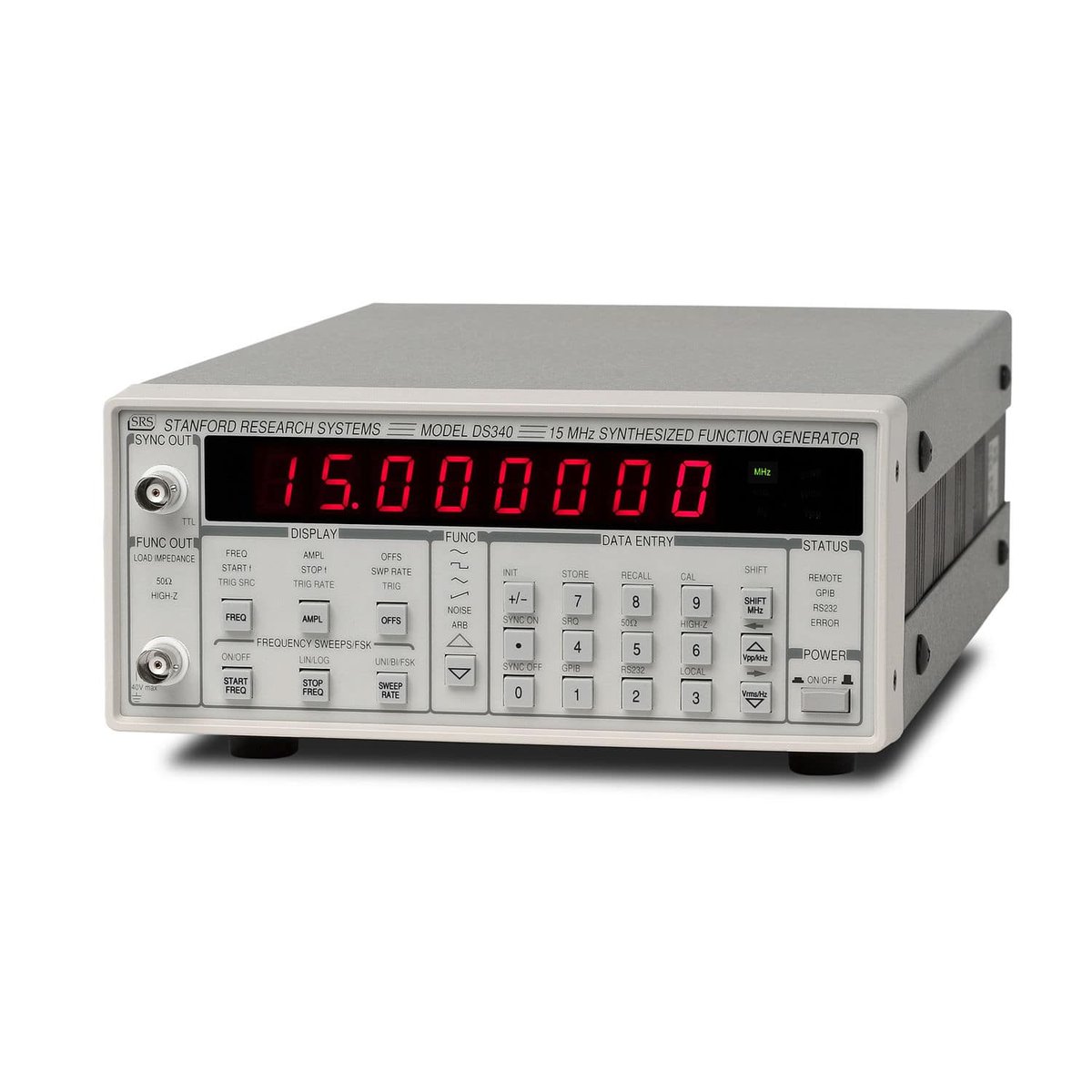
At its heart, a waveform generator is an electronic device (or sometimes a software tool) that precisely creates and outputs electrical signals with specific shapes—or waveforms. These signals are the foundational language of electronics, used to test components, simulate real-world conditions, drive circuits, and much more. Imagine trying to test a car engine without fuel; a waveform generator provides that essential "fuel" of electrical signals to nearly every electronic system.
You might hear them called "function generators" (for standard waveforms) or "arbitrary waveform generators" (for highly customizable signals). While the names vary, their purpose remains consistent: to provide reliable, precise, and often highly adjustable test signals for a vast range of research, development, and industrial tasks. To truly appreciate the breadth of their utility, it helps to understand the fundamental distinctions between their major categories. Learn more about waveform generators and their core principles.
Analog vs. Digital: Understanding the Engine Behind the Signal
The first major fork in the road when exploring waveform generators is understanding how they fundamentally create their signals. This distinction profoundly impacts the types of waveforms they can produce and their overall flexibility.
Analog Waveform Generators: The Traditionalists
These generators operate by using physical electronic components like oscillators, capacitors, and resistors to directly generate continuous electrical signals. They produce the basic, fundamental waveforms—sine, square, and triangle—with exceptional stability and often very low noise.
- Strengths: Known for their simplicity, robust stability, and often very pure, continuous output signals, especially for sine waves. They're typically less expensive for basic functionality.
- Limitations: Their output is largely limited to these standard shapes. Custom or complex waveforms are generally beyond their capabilities.
Digital Waveform Generators (Including Arbitrary Waveform Generators - AWGs): The Innovators
Modern demands for complex, user-defined, or highly specific signals led to the rise of digital waveform generators. These devices leverage digital signal processing (DSP) to create waveforms. How? They store waveform data (either pre-programmed or user-defined) as a series of digital points in memory. A high-speed digital-to-analog converter (DAC) then translates these digital points into an analog voltage signal, effectively "drawing" the desired waveform.
- Strengths: Incredible flexibility. Arbitrary Waveform Generators (AWGs) can create virtually any waveform shape you can define, from highly complex modulated signals to real-world transient events. They offer precise control over signal parameters, often with high resolution and sophisticated modulation capabilities.
- Limitations: Can be more complex and costly. The quality of the output signal (e.g., spectral purity, noise floor) depends heavily on the quality of the DAC, the sampling rate, and the internal signal processing.
The evolution of digital technology means that even "function generators" today often employ digital synthesis (Direct Digital Synthesis, or DDS) to achieve their standard waveforms, offering a blend of stability and feature richness previously exclusive to more expensive digital arbitrary waveform generators.
The Building Blocks: Common Waveforms and Their Essential Uses
Regardless of the generation method, the output of these devices boils down to fundamental signal shapes. Each waveform serves specific purposes in testing and development:
- Sine Wave: This is the most fundamental and ubiquitous waveform. It's a smooth, periodic oscillation, free of harmonics in its purest form.
- Uses: Ideal for testing audio equipment (speakers, amplifiers), characterizing filters, evaluating communication systems (as it's the basis for many modulated signals), and any application requiring a pure, single-frequency signal.
- Square Wave: Characterized by its instant transitions between a high voltage level and a low voltage level, with flat plateaus in between.
- Uses: Absolutely critical for digital circuit testing, clock signal simulation, driving switching circuits (like MOSFETs), and verifying logic gates. The fast rise and fall times are key for measuring slew rates and timing.
- Triangle Wave: Features a linear rise to a peak voltage, followed by a linear fall back to the minimum voltage, creating a symmetrical triangular shape.
- Uses: Excellent for testing linear circuits (e.g., op-amps, comparators), sweep circuits, voltage-controlled oscillators (VCOs), and in audio synthesis for its distinct harmonic content.
- Sawtooth Wave: Similar to a triangle wave but asymmetrical, with either a rapid rise and slow fall, or a slow rise and rapid fall.
- Uses: Primarily employed in sweep circuits (like oscilloscope time bases or frequency sweeps), timing generation, and certain types of modulation experiments.
- Pulse Wave: A square wave variant where the ON (high) time can be independently controlled relative to the OFF (low) time. This ratio is known as the duty cycle.
- Uses: Essential for timing, triggering digital circuits, simulating radar pulses, pulse-width modulation (PWM) applications (motor control, power supplies), and characterization of switched-mode power supplies.
Understanding these basic waveforms is the first step in appreciating how a generator's features empower you to create the exact electrical environment needed for your work.
Deciphering the Specs: Key Waveform Generator Features & Specifications
Now we get to the core of device performance. The "specifications sheet" of a waveform generator can seem daunting, but once you understand what each key feature signifies, you'll be well on your way to making an informed decision.
1. Frequency Range: How Fast Can it Wiggle?
This specifies the minimum and maximum frequencies (in Hertz, Hz) the generator can produce. It's perhaps the most fundamental specification, dictating the bandwidth of signals you can work with.
- Why it matters:
- Audio Applications: You might need frequencies from a few Hz up to 20 kHz.
- Digital Electronics: Clock signals can be in the tens or hundreds of MHz.
- RF/Communications: Certain applications demand signals in the GHz range.
- Practical Tip: Don't overspend on a range you won't use, but ensure it meets your current and anticipated future needs. A generator capable of 120 MHz might be overkill for basic audio testing but essential for high-speed digital design.
2. Amplitude Output: How Strong is the Signal?
This refers to the voltage level of the output signal, typically specified as peak-to-peak (Vpp), RMS (Root Mean Square), or into a specific load impedance (e.g., 50 Ω). It's crucial for matching the generator's output to the input requirements of the device under test (DUT).
- Why it matters:
- Driving High-Power Devices: You might need a higher Vpp output (e.g., 20 Vpp).
- Sensitive Inputs: Extremely low amplitude control (mV range) is vital for testing delicate sensors or low-noise amplifiers.
- Load Impedance: The specified amplitude often assumes a 50 Ω load. Be aware that the actual voltage delivered to a different load impedance will change.
- Look for: A wide dynamic range (e.g., 80 dB) and fine amplitude resolution (e.g., mV steps) for precise control across different test scenarios.
3. Waveform Accuracy and Stability: How True and Consistent is the Signal?
This category encompasses several critical metrics that describe the quality and reliability of the output signal.
- Frequency Accuracy/Stability: How close the actual output frequency is to the set frequency, and how much it drifts over time or with temperature changes.
- Amplitude Accuracy/Flatness: How close the actual output amplitude is to the set amplitude, and how consistently it maintains that amplitude across its frequency range.
- Harmonic Distortion (THD): For sine waves, this measures the presence of unwanted harmonic frequencies, indicating signal purity. Lower THD is better, especially for audio and precision RF work.
- Phase Noise: Particularly critical for RF and communication applications, this measures short-term fluctuations in the phase of the signal, affecting signal-to-noise ratio in modulated systems.
- Jitter: For square/pulse waves and arbitrary waveforms, jitter refers to the short-term, random variations in the timing of the signal edges. Low jitter is crucial for high-speed digital timing applications.
- Why it matters: Inaccurate or unstable signals can lead to misleading test results, incorrect circuit behavior, or difficulty in system synchronization. For instance, an arbitrary waveform generator with poor jitter performance could cause timing errors in a high-speed data bus simulation.
4. Modulation Capabilities: Adding Complexity to Your Signal
Modulation is the process of varying one or more properties of a carrier wave (like a sine wave) with a modulating signal (information). Waveform generators with modulation capabilities are essential for testing communication systems, where information is encoded onto a carrier.
- Common Modulation Types:
- AM (Amplitude Modulation): Varies the amplitude of the carrier.
- FM (Frequency Modulation): Varies the frequency of the carrier.
- PM (Phase Modulation): Varies the phase of the carrier.
- FSK (Frequency Shift Keying), PSK (Phase Shift Keying), ASK (Amplitude Shift Keying): Digital modulation schemes.
- PWM (Pulse Width Modulation): Varies the duty cycle of a pulse wave.
- Why it matters: If you're working with radio frequency (RF) circuits, wireless communication, or even certain sensor interfaces, robust modulation features (both internal and external modulation inputs) are indispensable.
5. Advanced Features: Precision & Control at Your Fingertips
Beyond the core specs, modern waveform generators offer a host of features that enhance their versatility and ease of use.
- High Sampling Rate & Vertical Resolution: For digital and arbitrary waveform generators, a higher sampling rate (e.g., 1.2 GSa/s) means more data points define the waveform, allowing for higher frequencies and finer detail. High vertical resolution (e.g., 16-bit) means more discrete amplitude levels, resulting in a smoother, more accurate analog output from the digital data.
- TrueArb Technology: Some advanced AWGs, like those in the SIGLENT SDG2000X Series, boast technologies such as TrueArb. This allows for direct point-by-point arbitrary waveform generation from memory (e.g., 8 to 8 Mpts), rather than relying on DDS interpolation, which can introduce artifacts. The benefit? Very low jitter (often < 150ps) and greater waveform fidelity for custom shapes.
- EasyPulse Technology: Specifically designed to overcome limitations of DDS when generating square or pulse waveforms, EasyPulse (found in the SDG2000X series) enables precise control over pulse width (minimum 16.3ns, 100ps step) and rise/fall times (minimum 8.4ns, 100ps step). This is crucial for accurately testing digital circuits where edge integrity is paramount.
- Sweep & Burst Functions:
- Sweep: Automatically varies the output frequency, amplitude, or duty cycle over a defined range and time. Useful for characterizing filters or resonant circuits.
- Burst: Generates a specific number of cycles of a waveform, triggered internally or externally. Essential for radar simulations, pulsed laser applications, or transient response testing.
- Harmonics Mode: Allows the generation of signals with specific harmonic content, useful for distortion testing or simulating non-linear effects.
- Frequency Counter: A built-in feature (e.g., 0.1Hz~200MHz input range) that measures the frequency of an external signal, adding a valuable diagnostic tool to the generator.
- User Interface & Connectivity: Touchscreen displays (like the 4.3” display on the SDG2000X), intuitive menus, and software for arbitrary waveform editing (e.g., EasyWave) significantly improve usability. Standard interfaces such as USB, LAN (VXI-11), and optional GPIB ensure seamless integration into automated test environments.
- Dual Channels: Many modern generators offer two independent output channels, enabling the generation of two separate signals (e.g., for differential signaling, phase relationships, or complex I/Q modulation).
The combination of these features allows a generator like the SIGLENT SDG2000X series to offer high fidelity sine output with a low noise floor, capacity for large signal output (20 Vpp @20 MHz), and sophisticated modulation options, making it a versatile tool for demanding applications.
Where the Signals Go: Key Applications of Waveform Generators
The utility of a waveform generator spans nearly every corner of electronics and beyond. Here are some primary application areas:
- Electronics Testing and Repair: This is perhaps the most common use. Waveform generators simulate input signals for circuit debugging, fault detection, performance verification, and system calibration. Whether it's feeding a clock signal to a microcontroller or an audio tone to an amplifier, the generator provides the predictable input needed to observe the output.
- Communications Systems Development: From creating modulated carrier waves for wireless systems to simulating data streams for network devices, generators are indispensable. They allow engineers to test transmitters, receivers, and antennas under various signal conditions, including noise and interference.
- Audio and Music Production: Waveform generators are vital for testing audio equipment (amplifiers, speakers, microphones), characterizing frequency response, and even for generating specific sound effects and tones for synthesizers.
- Research and Education: In academic and industrial research labs, these devices are used to conduct experiments in signal processing, control systems, physics, and more. They are also fundamental teaching tools, allowing students to visualize electronic principles in action.
- Medical and Industrial Control: Specialized generators can produce signals for medical diagnostic equipment (e.g., ultrasound, MRI) or for driving precision motors and actuators in industrial automation.
Each application often demands a specific set of waveform generator features & specifications, highlighting why careful selection is so crucial.
Making the Right Choice: Selecting Your Waveform Generator
Choosing the right waveform generator isn't about finding the most expensive or feature-rich device; it's about finding the best fit for your specific needs, now and in the foreseeable future. Here’s a practical framework:
- Define Your Required Waveforms:
- Do you only need basic sine, square, and triangle waves? An analog or basic DDS function generator might suffice.
- Do you need custom, complex, or highly specific signals? An Arbitrary Waveform Generator (AWG) is essential.
- Will you need precise pulse control (width, rise/fall times)? Look for features like EasyPulse.
- Determine Your Frequency Range:
- What's the highest frequency you anticipate needing? What's the lowest? Factor in some headroom for future projects.
- Don't pay for GHz if you're only working with audio (kHz).
- Consider Amplitude and Output Quality:
- What voltage levels do your devices under test (DUTs) require? Do you need fine amplitude resolution?
- How critical are signal purity (low THD), stability, and low jitter for your applications? For RF or high-speed digital, these are paramount.
- Evaluate Modulation Capabilities:
- Are you working with communication systems? If so, which modulation types (AM, FM, PM, FSK, etc.) are critical?
- Do you need internal modulation sources or the ability to input an external modulating signal?
- Assess Interface and Control:
- How will you interact with the device? A touchscreen is convenient for standalone use.
- Do you need software integration for complex waveform editing?
- What connectivity options (USB, LAN, GPIB) are necessary for your test environment and automation needs?
- Account for Your Budget:
- Waveform generators range from a few hundred dollars to tens of thousands. Balance desired features against your financial constraints. Often, a mid-range device with a good balance of core specs and advanced features (like the SIGLENT SDG2000X series) offers the best value.
- Future-Proofing (Within Reason): While you don't want to overspend, consider if your projects might evolve to require more advanced features in the next 1-3 years. A slightly more capable device now could save you from buying another one later.
By systematically addressing these points, you can narrow down your options and confidently select a waveform generator that will be a valuable asset to your workbench for years to come.
Keeping Your Gear in Top Shape: Maintenance Tips
A waveform generator is a precision instrument, and like any valuable tool, a little care goes a long way in ensuring its longevity and accurate performance.
- Regular Calibration: Over time, component drift can affect accuracy. Adhere to the manufacturer's recommended calibration schedule (e.g., annually) to maintain specified performance. This is perhaps the most crucial maintenance step for any test equipment.
- Use Proper Cables and Connectors: Always use high-quality, impedance-matched (e.g., 50 Ω BNC) cables and connectors. Poor cables can introduce noise, reflections, or attenuate your signal, negating the precision of your generator.
- Keep Firmware Updated: For digital waveform generators, regularly check the manufacturer's website for firmware updates. These updates often improve performance, add new features, or fix bugs.
- Environmental Control: Store and operate your unit in a dry, dust-free environment with stable temperatures. Avoid extreme heat, cold, or humidity, which can damage internal components.
- Gentle Handling: Avoid dropping or subjecting the unit to harsh impacts. While built for durability, they are still sensitive electronic devices.
- Power Down Properly: Always follow the manufacturer's instructions for powering on and off, and use a surge protector to guard against power fluctuations.
These simple practices will help ensure your waveform generator continues to deliver precise, reliable signals, making your testing and development work smoother and more accurate.
Common Questions & Misconceptions
"Is a function generator the same as an arbitrary waveform generator?"
Not exactly. A "function generator" typically refers to a device that produces standard, mathematically defined waveforms (sine, square, triangle, sawtooth). An "arbitrary waveform generator" (AWG) is a type of digital function generator capable of producing any user-defined waveform, not just the standard ones. Many modern devices combine these capabilities.
"Why do I care about 'jitter' if I'm just looking at a slow signal?"
For slow signals, jitter might not be a primary concern. However, as signal frequencies increase or when precise timing is critical (e.g., in digital communication, clock generation, or triggering events), even small amounts of jitter can lead to errors, data corruption, or unreliable system behavior. It's a critical spec for high-speed digital and RF applications.
"Can a waveform generator create RF signals?"
Yes, many can. High-end waveform generators, especially those designed for communications or RF applications, can generate signals into the hundreds of MHz or even GHz range, suitable for testing RF components and systems. However, dedicated RF signal generators might offer better spectral purity, modulation depth, and higher frequencies for specialized RF work.
"What's the difference between output impedance and load impedance?"
Output impedance is an intrinsic property of the generator's output circuit (often 50 Ω or 75 Ω). Load impedance is the impedance of the device you're connecting the generator to. For maximum power transfer and signal integrity, the load impedance should ideally match the generator's output impedance. If they don't match, you'll see voltage division, which can affect the actual amplitude delivered to your DUT.
Your Next Steps: Putting Knowledge into Practice
You now have a solid foundation in understanding waveform generator features & specifications. The next logical step is to translate this knowledge into action:
- Assess Your Current Needs: List the specific waveforms, frequency range, amplitude, and signal quality your current projects demand.
- Anticipate Future Requirements: Consider how your work might evolve. Will you need more complex waveforms or higher frequencies in the near future?
- Research Specific Models: With your requirements in hand, begin exploring devices from reputable manufacturers. Pay close attention to the detailed specification sheets. Use examples like the SIGLENT SDG2000X series as a benchmark for advanced features.
- Read Reviews and Ask Questions: Consult user reviews, forums, and if possible, speak with colleagues or experts who use waveform generators in similar applications.
By carefully considering these factors, you're not just buying a piece of equipment; you're investing in a powerful tool that will enable greater precision, efficiency, and capability in all your electronic endeavors.