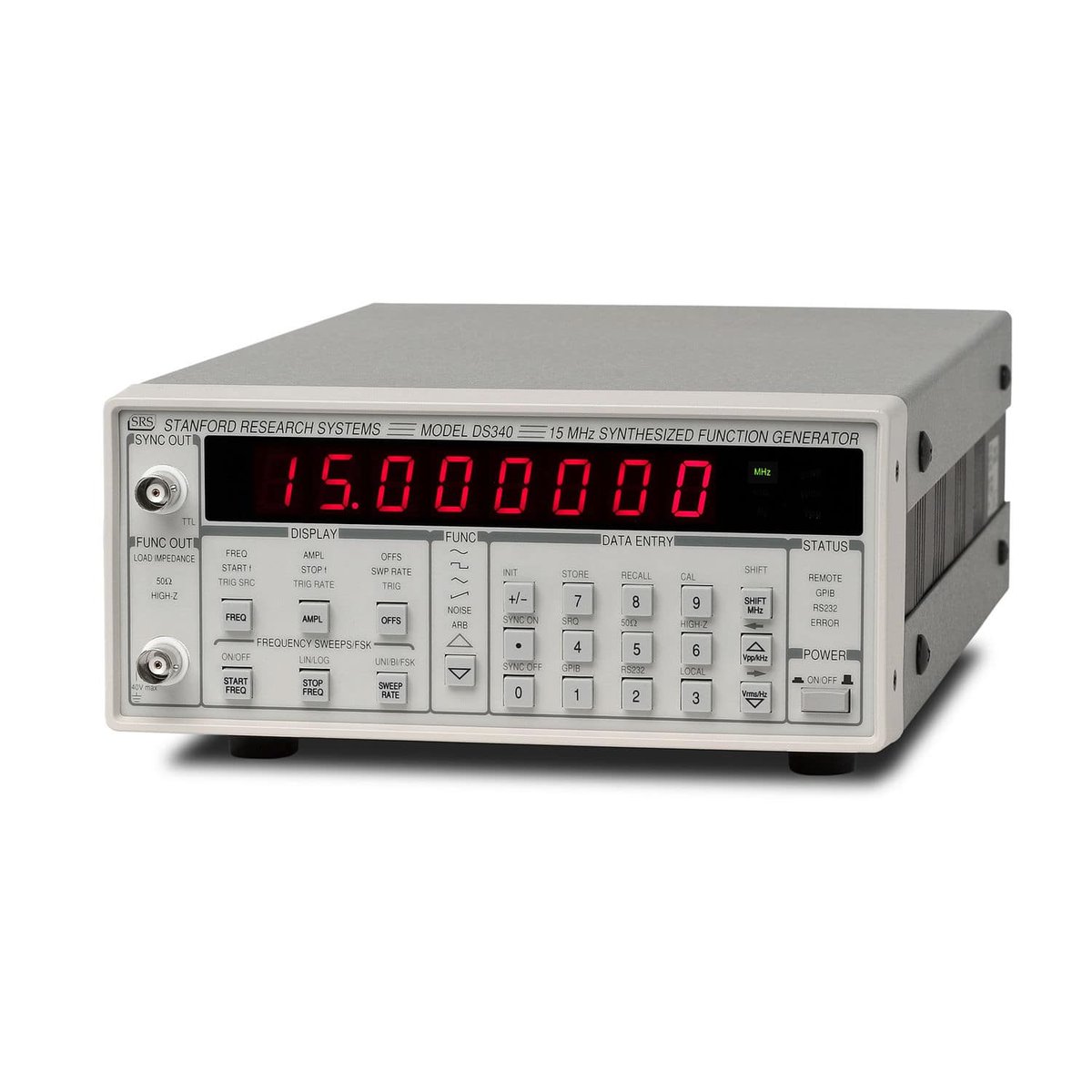
When you think about the intricate dance of electronics, from the smartphone in your pocket to the life-saving medical devices in hospitals, there’s a quiet hero orchestrating much of the behind-the-scenes magic: the waveform generator. These ingenious instruments produce precise, controlled electrical signals that are essential for testing, designing, and optimizing nearly every piece of modern technology.
But it's not just about creating a simple sine wave anymore. Today, the real power lies in the advanced waveform generator applications that are pushing the boundaries of what's possible in diverse fields, enabling faster communications, more accurate medical diagnostics, and robust industrial systems.
At a Glance: What Waveform Generators Do for Us
- Test & Validate: Essential for diagnosing and calibrating electronic circuits, ensuring they perform as expected.
- Innovate Communications: Create complex modulated signals for 5G, Wi-Fi, and radar systems, encoding vast amounts of information.
- Advance Medicine: Simulate biological signals like heartbeats for device testing or deliver precise pulses for therapeutic treatments.
- Enhance Industrial Control: Replicate sensor data for process simulation and stress-test critical power electronics.
- Unleash Arbitrary Power: Modern generators (AWGs) can create virtually any custom signal, from single-shot anomalies to highly complex, multi-channel waveforms.
- Enable Research: Provide the precise stimuli needed for cutting-edge scientific experiments, including quantum computing.
The Heartbeat of Electronics: Understanding Waveform Generators
At its core, a waveform generator is a sophisticated signal source. Imagine an artist meticulously drawing a specific shape, but instead of ink on paper, it’s electricity over time. This shape, or waveform, is defined by parameters like amplitude (signal strength), frequency (how fast it repeats), and phase (its position in a cycle).
These devices convert a digital blueprint of a waveform into a tangible analog electrical signal, often through a high-speed digital-to-analog converter (DAC). This means they can precisely reconstruct everything from a perfectly pure sine wave—mathematically defined as V(t) = A sin(2πft + ϕ) + Voffset—to a jagged, user-defined arbitrary waveform. For a deeper dive into the fundamentals, you might find our guide on Understanding waveform generators particularly helpful.
Key performance metrics tell you a lot about a generator's capabilities:
- Bandwidth: How fast and complex a signal it can produce (from MHz to GHz).
- Sample Rate: How many data points it can generate per second (e.g., 10 GS/s for nanosecond-edge pulses).
- Vertical Resolution: The precision of its voltage levels (12-16 bits for incredibly low distortion, like <0.1% THD).
- Arbitrary Waveform Memory: How long or complex a custom waveform it can store and generate (up to 64 GSa).
From Pure Tones to Digital Precision: How Waveforms Come to Life
The journey of waveform generation has seen remarkable evolution. Early designs relied on analog components like RC or LC oscillators, which are great for producing fundamental sine waves. For instance, a Wien Bridge oscillator produces clean sine waves at a frequency determined by its resistors and capacitors, f = 1/(2πRC). LC oscillators, like the Colpitts or Hartley, use resonant tank circuits to generate stable frequencies, with Colpitts designs known for superior frequency stability.
Integrated circuits (ICs) like the XR-2206 simplified things, creating compact function generators that could output sine, square, and triangle waves using clever internal circuitry—often by charging/discharging a capacitor and then shaping the resulting signals.
However, the real game-changer has been the shift to digital techniques:
- Direct Digital Synthesis (DDS): This widely adopted method builds waveforms digitally using a phase accumulator and lookup tables. It allows for incredibly fine frequency resolution, often sub-Hertz, because the output frequency (f_out) is precisely calculated from a frequency control word (Δϕ), clock frequency (f_clk), and accumulator bit width (N): f_out = Δϕ * f_clk / 2^N. While powerful, DDS systems must contend with limitations like phase truncation spurs and amplitude quantization.
- Microcontroller-Based Generation: Modern microcontrollers, like ARM Cortex-M or ESP32, leverage their integrated DACs and timers to implement DDS, offering flexible and cost-effective solutions for many applications. They excel when real-time tuning and adaptability are crucial.
- FPGA Implementations: For the most demanding high-speed applications, Field-Programmable Gate Arrays (FPGAs) are the go-to. Their parallel processing capabilities allow for clocks exceeding 500 MHz and nanosecond timing precision. FPGAs are at the heart of advanced arbitrary waveform generators (AWGs), which can achieve stunning performance like 1 GS/s sample rates, 800 MHz bandwidth, and incredibly low jitter (<1 ps RMS). They interface with cutting-edge high-speed DACs, like those using the JESD204B/C standard, capable of data rates up to 12.5 Gbps per lane.
This evolution in generation technology directly fuels the incredible breadth of waveform generator applications we see today.
The Core Canvas: Common Waveform Types and Their Power
Before diving into specific applications, it's worth understanding the workhorse waveforms:
- Sine Wave: The purest form, a single frequency. Ideal for AC power analysis, audio testing, and RF communications where minimal harmonic distortion is key.
- Square Wave: Abruptly alternates between two voltage levels. Crucial for digital clock signals, Pulse Width Modulation (PWM) control, and testing transient responses in digital circuits. Its sharp edges are rich in odd harmonics, which diminish at a rate of 1/n.
- Triangle Wave: Characterized by a linear rise and fall. Spectrally cleaner than square waves (harmonics fall off at 1/n²), making it useful for sweep oscillators, audio synthesis, and analog-to-digital converter (ADC) linearity testing.
- Sawtooth Wave: A linear ramp followed by an abrupt reset. Rich in both even and odd harmonics (1/n amplitudes), it's employed in analog music synthesizers and oscilloscope time-base generators.
In terms of spectral purity (how "clean" they are from unwanted frequencies), the general hierarchy is: Sine > Triangle > Sawtooth > Square. Understanding these fundamental shapes and their properties is the first step in unlocking their potential in diverse applications.
Where Waveform Generators Shine: Core Applications
The ability to create and manipulate these signals precisely makes waveform generators indispensable across industries.
1. Precision Testing & Calibration of Electronic Systems
This is arguably the most fundamental and widespread application. When you design a new circuit, build an amplifier, or manufacture a sensor, you need to know if it works and how well.
- Characterizing Circuit Performance: By injecting known, stable signals (like sine waves), engineers can measure critical parameters such as gain, bandwidth, frequency response (using swept sine waves to generate Bode plots), and harmonic distortion (THD). For instance, to assess an audio amplifier's fidelity, you'd feed it a pure sine wave and measure the distortion added to the output.
- Transient Response Analysis: Square waves are invaluable for testing how circuits respond to sudden changes. By analyzing the rise time, fall time, overshoot, and undershoot of the circuit's output, engineers can identify issues like ringing or slow responses.
- Calibration and Verification: Waveform generators are used to calibrate other test equipment and ensure devices meet their specifications. This involves verifying frequency accuracy (often against a high-precision frequency counter) and amplitude linearity across the operating range. Modern crystal oscillators, for example, can achieve frequency stability within ±1 ppm (parts per million), which generators must match or exceed for calibration tasks.
2. Shaping the Future of Communication
In the age of gigabit data and constant connectivity, waveform generators are central to designing, testing, and deploying communication systems.
- Signal Processing and Modulation: Communication relies on encoding information onto a carrier signal. Waveform generators create these carrier signals and then apply various modulation techniques:
- Amplitude Modulation (AM): Varying the amplitude of the carrier wave based on the information signal (s(t) = Ac[1 + ka m(t)] cos(2πfct)).
- Frequency Modulation (FM) and Phase Modulation (PM): Varying the frequency or phase, respectively.
- Digital Modulation: Modern communication heavily uses digital modulation schemes like Quadrature Amplitude Modulation (QAM) and Phase-Shift Keying (PSK). Advanced AWGs can generate these complex constellations, often incorporating pulse shaping filters (like raised cosine) to minimize intersymbol interference, which is critical for high-speed data transmission in technologies like 5G New Radio (NR) Orthogonal Frequency-Division Multiplexing (OFDM) signals.
- Software-Defined Radios (SDRs): AWGs are indispensable for developing and testing SDRs, allowing engineers to simulate a vast range of real-world radio environments and signal types, from simple sine waves to highly complex digital modulated waveforms.
- Radar Systems: Radar relies on sending out precise pulses and analyzing the reflections. Waveform generators create specialized signals, such as chirp modulation (s(t) = Ac cos(2π(f0t + K/2 * t^2))), which sweep across a range of frequencies, improving detection range and resolution. They also help implement predistortion techniques to mitigate non-linear distortions in radar transmitters.
3. Transforming Medical & Industrial Frontiers
Beyond traditional electronics, waveform generators are making a profound impact on health and industrial efficiency.
- Medical Applications:
- Biomedical Simulation: They simulate physiological signals to test medical devices. For instance, waveform generators can recreate complex cardiac signals (V_ECG(t) = sum An * e^(-(t-μn)^2 / (2σn^2))) for testing ECG machines, ensuring they accurately detect and interpret heart activity.
- Therapeutic Devices: In cutting-edge treatments like Transcranial Magnetic Stimulation (TMS), waveform generators are used to produce high-current pulsed waveforms with incredibly fast slew rates (>1000 V/μs) to stimulate specific areas of the brain.
- Industrial Applications:
- Process Simulation: Replicating sensor outputs (e.g., strain gauge bridge signals: V_bridge = V_excitation * (ΔR / (4R)) * GF) allows engineers to test and calibrate control systems without needing to apply actual physical stress, saving time and resources.
- Stress Testing Power Electronics: They generate complex three-phase PWM (Pulse Width Modulation) waveforms with carrier frequencies ranging from 1-20 kHz to rigorously test power inverters, motor controllers, and other power conversion systems, ensuring their reliability under various load conditions.
- Non-Destructive Evaluation (NDE): In fields like material science, waveform generators drive ultrasonic transducers with optimized excitation pulses (e.g., tone-burst: V_toneburst(t) = A sin(2πfct) * e^(-(t-t0)^2 / (2τ^2))) to inspect materials for flaws without causing damage. The precise control over frequency and pulse shape is critical for detecting subtle defects.
- High-Voltage Testing: For specialized applications like partial discharge testing in high-voltage equipment, generators produce nanosecond-rise pulses superimposed on AC waveforms. Some specialized generators can even provide 30 kV outputs with less than 5 ns rise times and 16-bit resolution, crucial for simulating real-world electrical stresses and identifying insulation breakdown issues.
Beyond the Basics: Advanced Capabilities of Modern AWGs
Modern Arbitrary Waveform Generators (AWGs) are far more than just signal sources. They are sophisticated instruments packed with features that extend their utility:
- Integrated Attenuators and Amplifiers: Many AWGs include built-in output attenuators to precisely control signal strength, or even integrated amplifiers to boost signals for higher power applications.
- Comprehensive Modulation Suite: Beyond basic AM/FM, they offer advanced modulation capabilities directly, generating complex modulated signals without external modulators.
- Frequency Sweep Functions: The ability to automatically sweep across a range of frequencies is fundamental for characterizing device responses over an entire spectrum.
- Multi-Channel Synchronization: High-end AWGs often feature multiple output channels that can be precisely synchronized, with controllable phase offsets. This is crucial for applications like generating polyphase sine waves for motor control or creating I-Q (In-phase and Quadrature) constellations for advanced digital communications.
- Real-time Adaptation and Feedback: The most advanced AWGs can adjust their output waveforms in real-time based on external measurement results. This capability is revolutionary for demanding applications such as quantum error correction, where minimizing feedback times is critical for maintaining qubit coherence. For instance, they can integrate with signal demodulation or photon counting systems to dynamically modify the output based on immediate experimental feedback.
Choosing the Right Waveform Generator: What to Consider
With such a wide array of waveform generator applications, selecting the right instrument is key. Here’s what to keep in mind:
- Application Specifics: What kind of signals do you need? Standard waveforms, arbitrary shapes, modulated signals, or complex multi-channel outputs?
- Bandwidth and Sample Rate: These dictate the maximum frequency and the fastest edge rates your generator can produce. For high-speed digital signals or RF, you’ll need high sample rates (GS/s) and wide bandwidths (GHz).
- Vertical Resolution: Determines the amplitude accuracy and signal purity. Higher bit resolution (14-16 bits) means cleaner signals with less distortion, critical for precision measurements and communication signals.
- Arbitrary Waveform Memory: If you plan to generate long, complex, or non-repetitive arbitrary waveforms, ample memory (from MGa to GSa) is essential.
- Jitter and Phase Noise: For timing-critical applications (e.g., high-speed data, clock generation, radar), look for ultra-low jitter (<1 ps RMS) specifications.
- Number of Channels: Do you need single-channel, dual-channel, or multi-channel synchronization for I/Q signals or polyphase applications?
- Modulation Capabilities: If your application involves communication or signal processing, ensure the generator supports the necessary modulation types (AM, FM, PM, FSK, PSK, QAM, etc.).
- Output Voltage Range and Attenuation: Does it provide the necessary signal strength, and can it be precisely controlled?
- Connectivity and Software: Look for modern interfaces (USB, Ethernet, LXI, GPIB) and intuitive software for easy waveform creation and instrument control.
The Ever-Evolving Role of Waveform Generators
As technology continues its rapid advancement, the demand for more precise, complex, and flexible signal generation will only grow. From enabling the next generation of wireless communication (think 6G and beyond) to driving advancements in quantum computing and personalized medicine, waveform generator applications will continue to expand. These instruments aren't just tools; they are foundational enablers, constantly adapting to meet the challenges of innovation.
Understanding their capabilities and choosing the right one for your specific needs empowers you to push the boundaries of design, testing, and discovery in your own field.