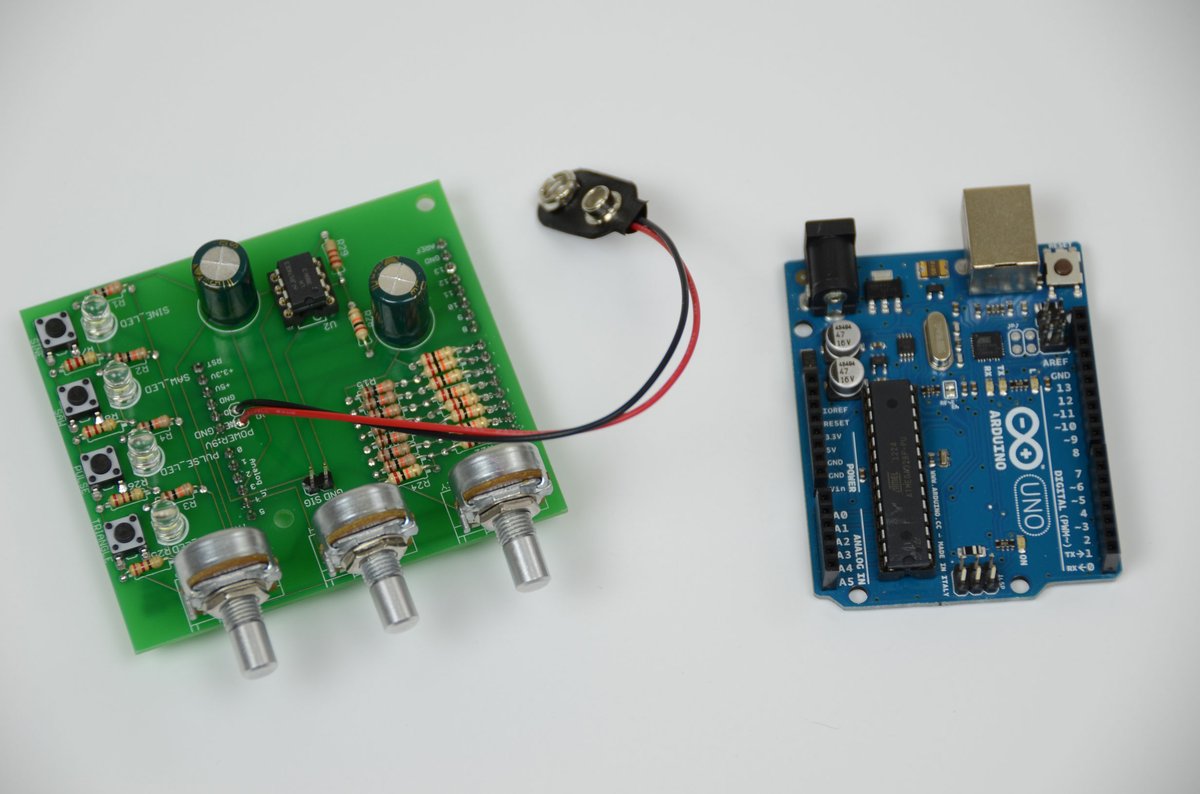
In the intricate world of electronics and scientific research, the ability to create precise electrical signals is not just a convenience—it's a necessity. From testing the smallest microchips to simulating complex quantum phenomena, engineers and scientists rely on a sophisticated piece of equipment known as a waveform generator. These devices are the unsung heroes behind countless innovations, allowing us to sculpt electrical reality to our exact specifications, injecting custom signals into devices under test to confirm proper operation or pinpoint elusive faults.
At its core, a waveform generator is an electronic test instrument designed to produce a variety of electrical waveforms. Unlike simpler function generators that typically offer a limited set of standard shapes like sine, square, and triangle waves, advanced waveform generators—particularly Arbitrary Waveform Generators (AWGs)—can synthesize virtually any desired waveshape. This unprecedented flexibility opens up a world of possibilities for design, validation, and troubleshooting.
The Engineering Behind Signal Creation
Imagine needing to create a signal that precisely mimics a specific real-world event, or perhaps a theoretical one, to push the boundaries of a new circuit design. Waveform generators achieve this by defining a signal as a series of "waypoints"—specific voltage targets at exact points in time. Whether the generator is instructed to instantaneously jump between these levels to form a sharp square wave, or to smoothly interpolate between them for a gentle triangle wave, the precision is paramount. This intricate process relies heavily on digital signal processing (DSP) to synthesize complex waveforms with remarkable accuracy.
To truly grasp the intricate engineering behind these devices, from their internal architecture to the algorithms that shape every pulse and curve, you'll want to Learn How Waveform Generators Work. This foundational understanding will illuminate how these machines translate digital instructions into tangible electrical outputs.
Beyond Standard Shapes: Exploring Generator Types and Advanced Features
While all waveform generators create signals, their capabilities can vary dramatically. Traditional function generators remain invaluable for many basic tests, offering a convenient way to produce standard, repetitive waveforms. However, for applications demanding ultimate flexibility, Arbitrary Waveform Generators (AWGs) stand out. AWGs can produce both repetitive and single-shot waveforms, often requiring an internal or external trigger for the latter, and can generate any user-defined waveshape up to a few gigahertz, typically outputting through BNC connectors requiring 50 or 75 ohm termination.
Modern waveform generators are packed with features that extend their utility far beyond simple signal generation. Many include built-in attenuators for output level control, sophisticated modulation capabilities to impress information onto a carrier wave, and the ability to "sweep" the output frequency across operator-determined limits using a voltage-controlled oscillator—an essential function for evaluating a circuit's frequency response. Beyond the standard waveforms, you might find additional built-in shapes like exponential rise/fall, sinx/x, and even cardiac waveforms for specialized biomedical testing. Some advanced models can retrieve waveforms directly from oscilloscopes, display waveform graphs in a "graph mode," and even output word patterns on multi-bit connectors to simulate complex data transmission scenarios. Understanding the specific capabilities and design differences is key, and you can delve deeper into the various Types of Waveform Generators available on the market. Furthermore, to make an informed choice, it's crucial to understand the nuances of Waveform Generator Features & Specifications.
For even greater complexity, DDS-based (Direct Digital Synthesis) AWGs leverage their digital nature to offer multiple channels with precisely controlled phase offsets or ratio-related frequencies. This enables the generation of polyphase sine waves, I-Q constellations, and sophisticated simulations of geared mechanical systems like jet engines, complete with complex channel-to-channel modulations. The most cutting-edge AWG models even integrate detection schemes, allowing them to adjust output waveforms in real-time based on measurement results—think signal demodulation, photon counting, or oscilloscope triggering. This integration of signal generation and detection minimizes feedback times for incredibly demanding applications such as quantum error correction and quantum teleportation, pushing the boundaries of what's achievable in science and technology.
Where Waveform Generators Make an Impact
The versatility of waveform generators makes them indispensable across a vast array of industries and research fields. In telecommunications, they are crucial for testing new modulation schemes and ensuring signal integrity. In automotive electronics, they simulate sensor inputs and validate control systems. Biomedical engineers use them to replicate physiological signals for device testing and research. From fundamental physics experiments to advanced aerospace engineering, the ability to create, manipulate, and precisely control electrical waveforms is a cornerstone of progress.
These machines are not just for basic testing; they are at the forefront of technological advancement, enabling innovation in areas previously thought impossible. Discover the vast array of fields where these devices are indispensable by exploring Explore Waveform Generator Applications.
Selecting the Right Tool for Your Needs
With such a wide spectrum of capabilities and features, choosing the right waveform generator for your specific application is a critical decision. Considerations range from the required frequency range and sample rate to the number of output channels, memory depth for complex waveforms, and the level of precision needed. Your budget, of course, also plays a significant role, but prioritizing features that directly impact your testing requirements will yield the best long-term value.
Whether you're setting up a new lab, upgrading existing equipment, or tackling a novel research challenge, understanding your specific needs and aligning them with the right generator is paramount. To help you navigate the myriad choices and make a confident decision, we've prepared a detailed guide on Choosing & Buying Waveform Generators.
Waveform generators are far more than just signal sources; they are precision instruments that empower engineers and scientists to understand, test, and innovate. As technology continues to advance, the capabilities of these devices will undoubtedly evolve further, enabling even more sophisticated simulations and breakthroughs that will shape the future of electronics and beyond.