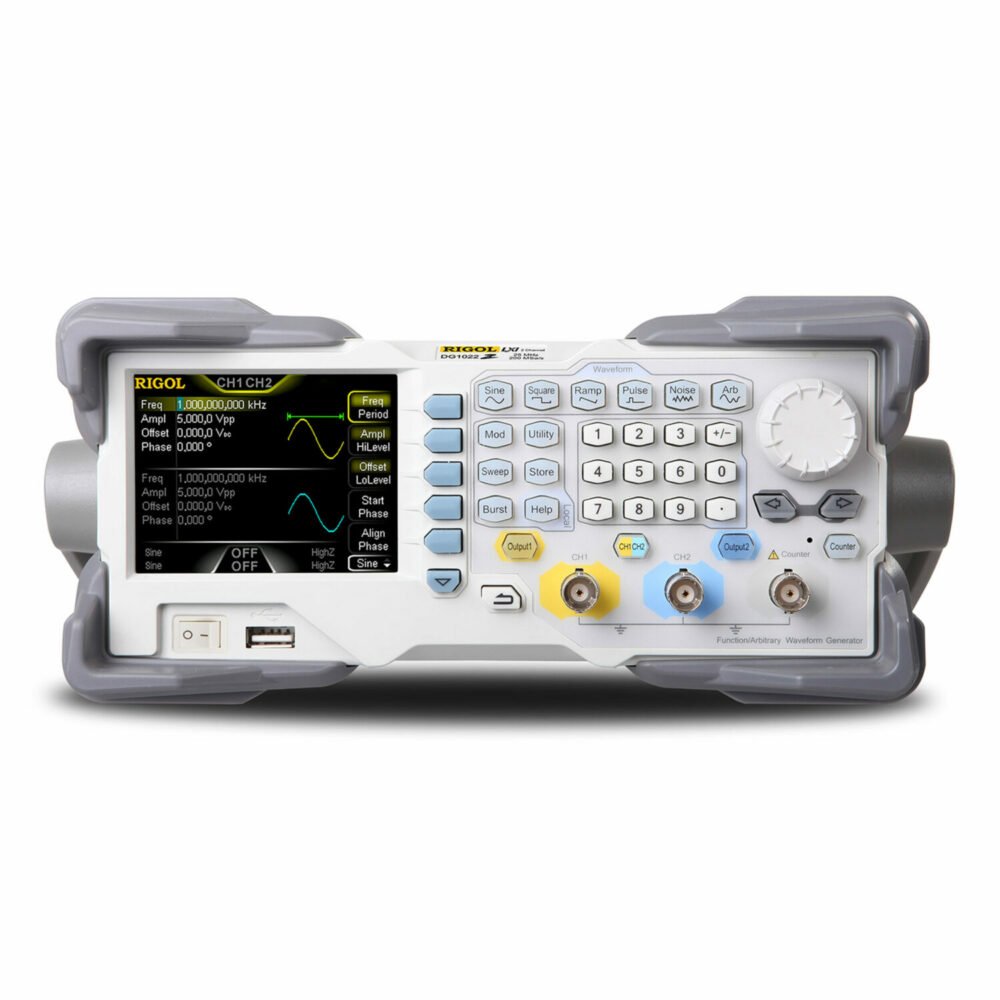
In the intricate world of electronics, where signals pulse, data flows, and circuits hum with life, what often goes unseen is the precise heartbeat that drives it all: the waveform. From the simplest blink of an LED to the complex dance of a quantum computer, every electronic system relies on carefully orchestrated electrical signals. And behind these signals, enabling their creation, simulation, and rigorous testing, stand the various types of waveform generators. These indispensable tools are the unsung heroes of the electronics lab, essential for anyone designing, debugging, or validating a circuit.
Understanding the different types of waveform generators isn't just about knowing what's available; it's about making informed choices that empower your projects, accelerate your troubleshooting, and ensure the reliability of your designs. Whether you're a hobbyist prototyping in your garage or an engineer developing cutting-edge technology, selecting the right generator can be the difference between a smooth workflow and a frustrating bottleneck.
At a Glance: Understanding Waveform Generators
- What they do: Produce specific electrical waveforms (sine, square, triangular, pulse, arbitrary, etc.) for testing and timing.
- Why they're crucial: Essential for circuit design verification, component characterization, system testing, and providing clock signals.
- Basic Implementations (Circuit-Level): Simple, discrete component oscillators like Astable Multivibrators, Schmitt Inverter, and NAND Gate designs—great for learning and specific embedded uses.
- Commercial Instruments (Benchtop/Software): Sophisticated devices for professional use, including Function Generators, Arbitrary Function Generators (AFGs), and Arbitrary Waveform Generators (AWGs).
- Specialized Types: RF Signal Generators and RF Vector Signal Generators for high-frequency and modulated signal needs.
- Key Differentiators: Frequency range, amplitude accuracy, waveform fidelity, arbitrary capabilities, modulation options, and cost.
The Pulse of Progress: Why Waveform Generators Matter
Think of a waveform generator as the conductor of an orchestra, dictating the tempo and rhythm for your electronic components. Without a reliable, controllable source of signals, testing a circuit would be like trying to judge a concert without hearing the music. These devices allow engineers and technicians to:
- Test component responses: How does a transistor amplify a sine wave? Does a filter block specific frequencies?
- Verify circuit functionality: Does a logic circuit respond correctly to a clock signal?
- Simulate real-world conditions: Can your power supply handle transient spikes? Will your communication system perform under specific modulation schemes?
- Troubleshoot and debug: Inject known signals to pinpoint where a circuit deviates from expected behavior.
- Generate timing and clock signals: Provide the fundamental beat for digital systems.
From the simplest square wave to highly complex, user-defined patterns, the ability to precisely control the electrical environment is paramount. It’s this control that turns a theoretical circuit diagram into a functional, reliable piece of hardware. For a deeper dive into the broader landscape of signal generation, you might find our complete guide to waveform generators particularly insightful.
Getting Down to Basics: Relaxation Oscillators for Everyday Needs
Before delving into the sophisticated commercial instruments, it's worth appreciating the fundamental building blocks of waveform generation. These "basic" types are often implemented with discrete components or simple integrated circuits, making them excellent for educational purposes, embedded systems, and generating straightforward, repetitive signals. They are often referred to as relaxation oscillators because their operation relies on the charging and discharging of a capacitor.
Astable Multivibrators: The Classic Square Wave
Perhaps the most recognized basic waveform generator is the astable multivibrator. These simple circuits, often built around transistors, op-amps, or even a 555 timer IC, inherently have no stable states. Instead, they continuously switch between two quasi-stable states, producing a continuous square wave output.
Typically, astable multivibrators are designed for a 1:1 mark-space ratio, meaning the "on" time (high voltage) is equal to the "off" time (low voltage). This makes them ideal for basic clock signals, blinking LEDs, or driving simple motor controls where a consistent, symmetrical pulse is needed. They are robust, relatively easy to build, and require minimal components.
Schmitt Inverter Waveform Generators: Simple, Yet Effective
Moving a step up in integration, Schmitt inverter waveform generators offer a more compact solution, leveraging the unique hysteresis of a Schmitt trigger inverter. Imagine a light switch that doesn't just turn on or off at a single point but has a "dead zone" in between. That's hysteresis, and it's key to these oscillators.
Here's how they work: A capacitor (C) is charged and discharged through a feedback resistor (R) connected to the input of a Schmitt trigger inverter. When the capacitor's voltage crosses the inverter's upper threshold, the output flips low. The capacitor then discharges until its voltage drops below the lower threshold, causing the output to flip high again. This continuous charging and discharging creates a repetitive square wave.
The choice of Schmitt inverter matters:
- TTL 74LS14 based: These are older but still used. They have specific input thresholds (e.g., ~0.8V lower, ~1.6V upper). Their output duty cycle tends to be around 33% (a 1:2 mark-space ratio), meaning the high state is shorter than the low state. To ensure oscillation, the feedback resistor (R) generally needs to be kept quite low, often below 1kΩ. They can generate frequencies from 1Hz to 1MHz, but the output waveform can distort at higher frequencies, becoming more trapezoidal than square.
- CMOS 40106B based: These are generally preferred for their superior performance. They can operate over a wider voltage range (3V to 15V), offer better noise immunity, and produce a much "squarer" output waveform, closer to a 1:1 mark-space ratio. Critically, their feedback resistor (R) can be much larger (up to 100kΩ), allowing for smaller and more cost-effective timing capacitors. This makes them suitable for frequencies from 0.1Hz to 100kHz. A small series resistor (e.g., 10kΩ) is often recommended with CMOS inputs to protect the sensitive MOSFET transistors during rapid capacitor discharge at higher frequencies.
Practical Modifications: - Complementary Outputs: By adding another Schmitt inverter to the primary output, you can create a second, inverse waveform, which is useful for push-pull drivers or complementary timing.
- Variable Frequency: Replacing the fixed feedback resistor with a potentiometer (in series with a small fixed resistor to prevent a short) allows you to adjust the output frequency on the fly.
- Frequency Division: For extremely low frequencies (think seconds or even minutes per cycle), you can generate a higher-frequency square wave and then feed it into a ripple counter (like the CMOS 4024 or 4040) to divide the frequency down by factors of 2, 4, 8, and so on.
NAND Gate Waveform Generators: Leveraging Logic
Logic gates aren't just for processing information; they can also generate it. NAND gate waveform generators provide another simple approach to creating square waves, particularly useful in digital systems where these gates are already present.
- Two NAND Gates: A common configuration uses two CMOS NAND gates with an RC network (R1 and C) and feedback via another resistor (R2). This setup creates an oscillating loop. The approximate frequency of oscillation is given by
1 / (2.2 * R1 * C), with R2 typically set to about 10 times R1 for stable operation. - Three NAND Gates ("Ring of Three"): For improved stability and a more reliable self-starting mechanism, especially with very small capacitor values, you can connect three inverting NAND gates in a loop. This "ring of three" configuration is less sensitive to power supply fluctuations and generally produces a nearly 50% duty cycle, making for a cleaner, more symmetrical square wave. The frequency calculation remains similar:
1 / (2.2 * R1 * C). This design highlights how simple logic elements can be repurposed for analog tasks.
Ring Oscillators: Speed Demons of the Digital World
While the previous types rely on RC networks, ring type waveform generators operate purely on the propagation delay inherent in logic gates. They consist of an odd number (e.g., 3, 5, 7) of inverting gates (like NOT gates or NAND gates used as inverters) connected in a closed loop, where the output of the last gate feeds back to the input of the first.
The signal continuously propagates around the ring, inverting at each stage. Since there's an odd number of inverters, the signal reaching the input of the first gate is always the opposite of its current state, causing it to flip, and the cycle repeats.
The frequency of oscillation (ƒ) is determined by the number of gates (n) and the propagation delay time (Tp) of each gate: ƒ = 1 / (2 * n * Tp). For example, five inverters each with an 8ns delay would yield a frequency of 1 / (2 * 5 * 8ns) = 12.5MHz.
Limitations: These oscillators are fast, but they tend to be quite unstable, sensitive to temperature and voltage fluctuations. They generally produce very high frequencies (tens of megahertz to gigahertz), making them more specialized for applications like clock generation in microprocessors or in frequency synthesis where raw speed is prioritized over precise control or varied waveforms. They are less practical for general-purpose signal generation compared to their RC-based cousins.
Stepping Up: Commercial Signal Generator Instruments for Advanced Testing
When you need more than a simple square wave, precise control over waveform parameters, or the ability to generate complex, custom signals, you turn to dedicated commercial instruments. These benchtop or PC-controlled devices offer a vastly expanded range of capabilities, essential for professional circuit design, testing, and debugging.
Function Generators: The Everyday Workhorse
The function generator is often the first instrument many engineers reach for. It's the versatile workhorse of the lab, capable of producing a variety of standard electrical waveforms:
- Sine waves: Fundamental for AC circuit analysis, filter testing, and audio applications.
- Square waves: Ideal for clock signals, digital circuit testing, and evaluating transient responses.
- Triangular/Ramp waves: Useful for sweeping frequencies, linear control signals, and testing linear components.
- Sawtooth waves: Similar to ramp waves, often used for sweep generators and timing.
- Pulse waves: More configurable than square waves, allowing adjustment of pulse width and delay, crucial for digital timing and trigger signals.
- Other specialized waves: Some models might include cardiac patterns, Gaussian pulses, or other fixed waveforms.
Function generators typically offer control over frequency, amplitude, DC offset, and sometimes basic modulation (AM, FM). They are characterized by their wide frequency range and the ability to generate these common waveforms with good fidelity, making them indispensable for a broad array of general-purpose electronic testing.
Arbitrary Function Generators (AFGs): Flexibility on Demand
Taking the capabilities of a standard function generator further, Arbitrary Function Generators (AFGs) combine preset waveforms with the ability to create and output user-defined, "arbitrary" waveforms. This means you're not limited to just sine, square, or triangle; you can draw a waveform on a screen or import data points to generate almost any shape you need.
Key advantages of AFGs include:
- Preset and Arbitrary: You get all the standard waveforms, plus the flexibility to define your own.
- Parameter Adjustments: Operators can precisely adjust speed, amplitude, offset, and add basic distortion or modulation schemes.
- Excellent Stability and Fast Response: AFGs offer high frequency stability and can switch between frequencies very rapidly. This makes them invaluable for tests requiring instant frequency changes, such as double pulse tests in power electronics, where precise timing and amplitude control are critical for characterizing MOSFETs or IGBTs.
- Moderate Complexity: They strike a balance between the simplicity of basic function generators and the extreme complexity of full arbitrary waveform generators.
AFGs are a strong choice when you need both standard waveforms and the occasional custom signal without venturing into the highest echelons of cost and complexity.
Arbitrary Waveform Generators (AWGs): Crafting the Unimaginable
The pinnacle of waveform generation versatility, Arbitrary Waveform Generators (AWGs) are highly sophisticated instruments designed to produce virtually any waveform imaginable. Unlike AFGs, which often start with standard waveforms and add arbitrary capabilities, AWGs are built from the ground up as advanced digital-to-analog converters (DACs) combined with powerful memory and sequencing engines.
AWGs operate much like a high-fidelity playback system. You define your waveform as a series of digital data points, store it in the AWG's memory, and then the instrument converts these digital points into a continuous analog signal. Their power lies in:
- Unparalleled Waveform Flexibility: If you can describe a waveform mathematically or capture it digitally, an AWG can generate it.
- Sequencing Capabilities: AWGs can concatenate, loop, jump, and trigger different segments of waveforms, allowing for incredibly complex and dynamic signal patterns that evolve over time. This is critical for simulating real-world scenarios or generating highly specific test vectors.
- High Resolution and Bandwidth: They typically offer higher vertical resolution (more bits per sample) and higher sampling rates than AFGs, leading to superior waveform fidelity and wider bandwidths.
When to Use an AWG: AWGs are indispensable in advanced research and development across various fields: - Optical Modulation: Creating the precise pulse shapes needed for high-speed optical communications.
- Quantum Computing: Generating the intricate microwave pulses required to manipulate quantum states.
- Wireless Network Stress Testing: Simulating complex interference, fading channels, or multi-carrier signals to thoroughly test communication devices.
- Radar and Sonar Simulation: Replicating complex chirps and pulse sequences.
While more expensive and complex to program, AWGs offer an unmatched level of control and fidelity for applications where standard waveforms simply won't suffice.
RF Signal Generators: For the Wireless World
When your signals venture into the radio frequency (RF) spectrum, standard function or arbitrary generators may fall short. RF Signal Generators are specifically designed for wireless testing and communication applications, operating at much higher frequencies (typically hundreds of MHz to tens of GHz).
Their primary focus is on characteristics crucial for RF systems:
- Frequency Range: Covering the spectrum relevant to Wi-Fi, Bluetooth, cellular, radar, and satellite communications.
- Frequency Setting Resolution: The ability to tune frequencies with extremely fine precision.
- Maximum Output Power: Delivering sufficient power to drive RF components and antennas.
- Phase Noise: A critical metric for RF signals, indicating the purity of the signal in the frequency domain. Low phase noise is essential for clear communication and accurate measurements.
RF signal generators typically offer various analog modulation schemes like Amplitude Modulation (AM), Frequency Modulation (FM), and Phase Modulation (PM), allowing you to simulate broadcast radio, basic radar pulses, or simple data transmission.
RF Vector Signal Generators: Complex Modulation Masters
For the sophisticated demands of modern digital wireless communications, you need a RF Vector Signal Generator. These instruments build upon the capabilities of standard RF signal generators by specializing in creating RF signals with complex digital modulation schemes.
Think of modern communication standards like 4G LTE, 5G, Wi-Fi 6, or Bluetooth. These don't just use simple AM or FM; they employ advanced techniques like Quadrature Amplitude Modulation (QAM), Orthogonal Frequency-Division Multiplexing (OFDM), and Spread Spectrum. Vector signal generators are designed to encode these complex digital data streams onto an RF carrier.
They achieve this by controlling both the amplitude and phase of the RF signal simultaneously (the "vector" part), allowing for highly efficient and robust data transmission. These generators are indispensable for:
- Testing wireless transceivers: Ensuring devices can correctly send and receive complex digitally modulated signals.
- Characterizing communication protocols: Validating compliance with specific wireless standards.
- Developing new wireless technologies: Prototyping and testing advanced modulation and coding schemes.
Choosing the Right Waveform Generator: A Practical Guide
Selecting the appropriate waveform generator is a critical decision that impacts your project's efficiency, accuracy, and budget. Here’s a breakdown of key considerations:
Decision Criteria: What to Look For
- Waveform Types:
- Standard functions (sine, square, triangle, pulse): A basic function generator suffices.
- User-defined, moderately complex: An AFG is likely a good fit.
- Highly complex, dynamic, with sequencing: An AWG is probably necessary.
- RF specific: You'll need an RF signal generator or vector signal generator.
- Frequency Range: What's the highest frequency you need to generate? Basic oscillators are Mhz, function generators often go to tens or hundreds of MHz, AFGs/AWGs can reach GHz, and RF generators go into tens of GHz. Always leave some headroom.
- Amplitude and DC Offset: What's the maximum voltage required? Does it need to be positive, negative, or bipolar? How precisely do you need to control the DC offset?
- Waveform Fidelity & Resolution:
- Vertical Resolution (bits): For arbitrary waveforms, more bits mean finer amplitude steps and a smoother, more accurate representation of the signal.
- Sampling Rate: Determines the maximum frequency and the level of detail an AWG/AFG can generate. Higher sampling rates mean more data points per second.
- Harmonic Distortion/Spectral Purity: How clean is the output signal? Crucial for sensitive measurements and RF applications.
- Modulation Capabilities: Do you need AM, FM, PM, FSK, PSK, QAM, or custom modulation? Basic function generators offer simple analog modulation, while vector signal generators excel at complex digital modulation.
- Phase Noise: Especially vital for RF applications, radar, and sensitive timing. Lower phase noise means a cleaner signal in the frequency domain.
- Channels: Do you need single-channel, dual-channel, or multi-channel outputs for differential signals, phase-shifted signals, or complex multi-tone tests?
- Triggering and Synchronization: Can the generator be triggered by an external event? Can it synchronize with other instruments? Important for complex test setups.
- Connectivity and Control: USB, Ethernet, GPIB? Software control options? Ease of programming?
- Budget: This is often the ultimate constraint. Basic oscillators can be built for pennies. Function generators are typically hundreds to a few thousand dollars. High-end AFGs, AWGs, and RF vector signal generators can easily range from thousands to hundreds of thousands of dollars.
Common Pitfalls to Avoid
- Over-specifying: Don't buy an AWG if a function generator does 90% of what you need. Extra features come with extra cost and complexity.
- Neglecting Phase Noise: For RF applications, poor phase noise can mask crucial signal characteristics, leading to inaccurate measurements and flawed designs. It's often overlooked by those new to RF.
- Underestimating Bandwidth: Remember that generating a "square" wave requires significant bandwidth beyond its fundamental frequency due to its harmonic content. Ensure your generator can cleanly produce the harmonics necessary for a true square wave.
- Ignoring Software/Usability: A powerful generator is only useful if you can easily program and control it. Check the user interface and software support.
Common Questions About Waveform Generators
What's the core difference between a function generator and an arbitrary waveform generator (AWG)?
Think of it like this: A function generator is like a music player with a fixed playlist of classic genres (rock, pop, jazz). It plays well-known, standard waveforms (sine, square, triangle). An Arbitrary Waveform Generator (AWG), on the other hand, is like a full-fledged music studio. It can play any custom sound you compose, down to individual notes and effects, with precise timing and sequencing. While an AFG (Arbitrary Function Generator) blurs the line by offering both, the AWG is designed for ultimate flexibility in creating truly unique, dynamic, and complex signals from digital data.
Can I build my own waveform generator?
Absolutely! For basic waveforms like square waves, you can definitely build your own using simple relaxation oscillators such as astable multivibrators, Schmitt inverter circuits, or NAND gate configurations. These are fantastic learning projects and perfectly suitable for embedded applications where precise control isn't paramount. However, generating high-fidelity sine waves, complex arbitrary waveforms, or signals at RF frequencies with good stability and low noise requires much more sophisticated design and components, which is why commercial instruments exist.
Why are some waveform generators so expensive?
The price tag on high-end waveform generators reflects the complexity and precision of their internal components and engineering. Factors include:
- High-speed, high-resolution DACs: Converting digital data to analog signals with extreme accuracy at gigasample-per-second rates.
- Low-noise analog circuitry: Ensuring the output signal is pure and free from unwanted interference.
- Advanced clocking and timing mechanisms: Maintaining phase coherence and frequency stability across channels and over time.
- Powerful digital signal processing (DSP): For real-time waveform creation, modulation, and sequencing.
- Extensive memory and software: To store and manage complex arbitrary waveforms.
- Rigorous calibration and testing: To guarantee performance specifications.
- Specialized RF components: For high-frequency models, including shielded enclosures and precise impedance matching.
What is "phase noise" and why does it matter?
Phase noise describes the short-term random fluctuations in the phase of a signal, particularly relevant for RF signals. Imagine a perfectly stable sine wave as a smooth, rhythmic swing. Phase noise is like tiny, random jitters or wobbles superimposed on that swing. In the frequency domain, it appears as "skirts" or sidebands around the main carrier frequency.
It matters because:
- Communication: High phase noise can cause interference between adjacent channels, degrade signal-to-noise ratio, and increase bit error rates in digital communication systems.
- Radar/Lidar: It limits detection range and accuracy, especially for detecting small or fast-moving targets.
- Precision Timing: Can introduce jitter in clock signals, affecting the performance of high-speed digital circuits.
- Frequency Synthesis: Accumulates as signals are multiplied or divided, making low phase noise crucial at the source.
The Future of Waveform Generation: Pushing Boundaries
The evolution of waveform generators continues at a rapid pace. We're seeing trends towards:
- Higher Bandwidth and Sampling Rates: Enabling the generation of ever-faster and more complex signals to keep pace with cutting-edge communication and computing technologies.
- Software-Defined Instruments: Greater integration with powerful software platforms for easier waveform creation, simulation, and analysis.
- Multi-Channel Synchronization: More precise phase coherence and timing across multiple output channels for highly complex testing scenarios.
- Increased Integration: Combining multiple instrument functions (e.g., generator, analyzer, oscilloscope) into single, more compact units.
- AI and Machine Learning Integration: Potentially for intelligent test pattern generation or adaptive waveform adjustments based on real-time circuit response.
Empowering Your Designs and Tests
Whether you're exploring the basics of electronics with a simple astable multivibrator or pushing the limits of quantum computing with a state-of-the-art arbitrary waveform generator, these devices are fundamental to innovation. By understanding the diverse types of waveform generators and their unique strengths, you gain the power to precisely sculpt the electrical world around your circuits.
So, take stock of your needs, consider the practicalities, and select the tool that will not just generate a signal, but generate success in your next electronic endeavor. The right waveform generator isn't just a piece of equipment; it's a vital partner in bringing your ideas to life and ensuring they perform exactly as intended.