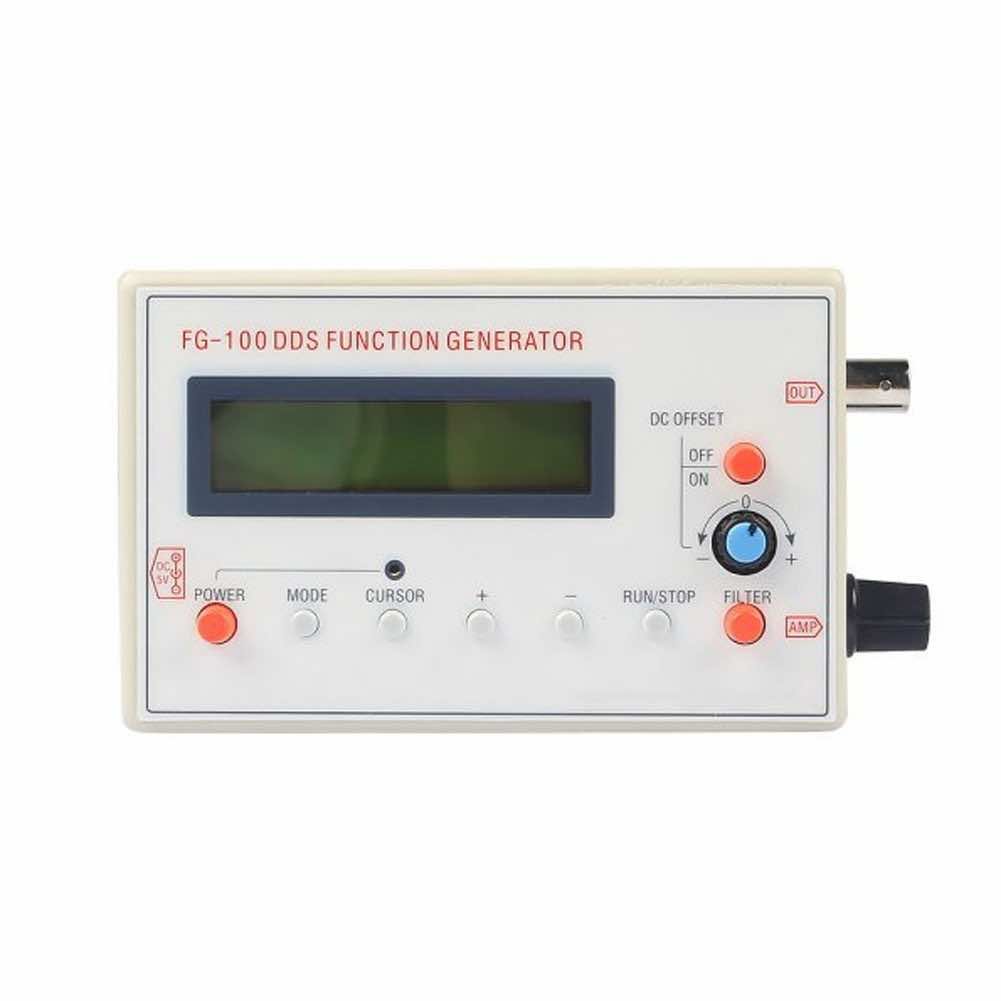
The Unseen Architects: How Waveform Generators Work to Sculpt Our Electronic World
Imagine designing a cutting-edge sensor, debugging a high-speed communication link, or even building a custom audio synthesizer. What's the common thread? You need a precise, dependable source of electrical signals—the very heartbeat of any electronic system. That's where waveform generators come in, shaping the exact electrical impulses required to bring your designs to life, test their limits, and ensure their flawless operation.
Understanding how waveform generators work isn't just for electronics gurus; it’s fundamental for anyone seeking to master the craft of circuit design, troubleshooting, and system integration. These indispensable instruments produce time-varying electrical signals with meticulous control over amplitude, frequency, and phase, essentially acting as the signal shapers of the electronic universe. Whether you need a perfectly pure sine wave or a complex, user-defined arbitrary signal, a waveform generator is your command center.
At a Glance: Key Takeaways on Waveform Generators
- Core Function: They produce precise, controllable electrical signals (sine, square, triangle, sawtooth, arbitrary) for testing, calibration, and system stimulation.
- Fundamental Principle: Most modern generators convert a digital representation of a waveform into an analog signal using a Digital-to-Analog Converter (DAC).
- Key Parameters: Important characteristics include bandwidth (max frequency), sample rate (time resolution), vertical resolution (DAC bit depth), and arbitrary waveform memory.
- Analog vs. Digital: Traditional analog oscillators (RC, LC) are simple but less precise; Direct Digital Synthesis (DDS) offers superior accuracy, stability, and waveform flexibility.
- Digital Powerhouses: Microcontrollers and FPGAs are increasingly used for their ability to implement DDS, offering cost-effective or high-speed solutions, respectively.
- Everywhere You Look: From validating circuit designs to simulating medical signals or driving industrial processes, waveform generators are essential tools across countless applications.
The Heartbeat of Electronics: What Waveform Generators Do
At their core, waveform generators are electronic instruments designed to create stable, predictable electrical signals that vary over time. Think of them as signal sculptors, capable of crafting everything from a mathematically pure sine wave to intricate, user-defined "arbitrary" waveforms. This ability to synthesize periodic or aperiodic signals makes them indispensable for a vast array of tasks: testing electronic circuits, calibrating communication systems, and stimulating sensors to see how they react.
The magic happens when a digital description of a waveform, often stored in memory or generated by algorithms (like the mathematical equation for a sine wave: V(t)=Asin(2πft+ϕ)+Voffset), is transformed into a real-world analog signal. This critical conversion is performed by a Digital-to-Analog Converter (DAC), which translates digital data points into varying voltage levels. High-end generators push the boundaries, offering features like phase-continuous frequency switching and incredibly low jitter (below 1 ps RMS), ensuring signals are not only precise but also exceptionally clean.
To properly evaluate a waveform generator, you'll need to look at its core performance parameters:
- Bandwidth: This indicates the maximum frequency at which the generator can produce undistorted waveforms, ranging from a few MHz to several GHz for specialized applications.
- Sample Rate: Essentially the DAC's clock speed, it dictates the time resolution of the output signal. A 10 GS/s (gigasamples per second) rate, for instance, is crucial for generating pulses with nanosecond-level edges.
- Vertical Resolution: Measured in bits, this is the DAC's bit depth, typically 12-16 bits for professional instruments. Higher resolution means finer amplitude steps and significantly lower Total Harmonic Distortion (THD), often below 0.1%.
- Arbitrary Waveform Memory: For user-defined signals, the depth of this memory is key. Advanced models can store up to 64 gigasamples (GSa), allowing for extremely long and complex custom waveforms.
A Symphony of Shapes: Understanding Waveform Types
Waveform generators are masters of variety, capable of producing a rich palette of signal shapes, each with unique characteristics and applications.
- Sine Wave: This is the most fundamental waveform, mathematically pure and containing only a single frequency (y(t)=Asin(2πft+ϕ)). Its smooth, undulating form is essential for AC power systems, RF communications, and audio testing, largely because of its minimal harmonic distortion. It's the gold standard for purity.
- Square Wave: Instantly recognizable, the square wave alternates abruptly between two discrete voltage levels, typically with a 50% duty cycle (y(t)=A⋅sgn(sin(2πft))). Unlike the sine wave, it's rich in odd harmonics, which diminish at a rate of 1/n (where 'n' is the harmonic number). Square waves are the backbone of digital clock signals, Pulse Width Modulation (PWM) control, and switching power supplies. Be aware that their steep rise/fall times can make them susceptible to ringing in circuits.
- Triangle Wave: Exhibiting a linear rise and fall with sharp peaks, triangle waves possess a cleaner spectrum than square waves, with harmonic content falling off at 1/n^2. They find use in sweep oscillators, audio synthesis, and the testing of Analog-to-Digital Converters (ADCs).
- Sawtooth Wave: This waveform features a linear ramp followed by an abrupt reset, resembling the teeth of a saw. It contains both even and odd harmonics, with amplitudes decreasing at 1/n. Sawtooth waves are commonly used in analog music synthesizers and as time-base generators in oscilloscopes.
When comparing these basic waveforms, we can look at their spectral purity: Sine waves reign supreme, followed by Triangle, then Sawtooth, and finally Square waves. While analog sine generators often rely on resonant circuits for their purity, modern digital synthesis methods, particularly Direct Digital Synthesis (DDS), can produce all these waveforms (and arbitrary ones) with high fidelity using lookup tables and advanced algorithms.
The DNA of Signals: Key Parameters You Control
Beyond the basic shape, precise control over several key signal parameters is what makes waveform generators so powerful.
- Frequency: The most fundamental parameter, frequency defines the number of complete cycles a waveform undergoes per unit time, measured in Hertz (Hz). It's directly related to the period (T) by the equation f=1T. Achieving high frequency stability is crucial; many generators rely on crystal oscillators capable of maintaining stability within ±1 part per million (ppm).
- Amplitude: This refers to the peak value of the waveform, defining its strength or intensity. Amplitude is meticulously controlled by components like programmable gain amplifiers (PGAs) or directly by the DAC. Crucially, amplitude accuracy can be affected by nonlinearities within the generator's output stages, a factor quantified by Total Harmonic Distortion (THD). The lower the THD, the cleaner and more accurate the signal's amplitude.
- Duty Cycle: Specific to pulse-like waveforms (especially square waves), duty cycle is the ratio of a pulse's active (high) duration to its total period, expressed as a percentage: D=thighT×100%. This parameter is critical for applications like Pulse Width Modulation (PWM) and efficient power delivery in switching circuits, often requiring resolutions below 0.1%. Notably, the harmonic content of a square wave is directly influenced by its duty cycle, offering another layer of signal shaping.
Building from Basics: Analog Oscillator Architectures
Before the digital age revolutionized signal generation, analog oscillators were the workhorses of electronics. These circuits leverage fundamental electrical properties to create continuous, repetitive waveforms.
RC Oscillators: Simplicity in Sine Waves
RC (Resistor-Capacitor) oscillators are celebrated for their simplicity and are often used for lower-frequency applications.
- Wien Bridge Oscillator: This elegant circuit generates sinusoidal waveforms using a specific RC network. To sustain oscillation, it requires an amplifier with a precise gain of exactly 3 and often incorporates a nonlinear element (like a thermistor or incandescent bulb) for amplitude stabilization. The oscillation frequency is determined by the RC components: f=12πRC. For instance, an R of 15.9 kΩ and a C of 10 nF will yield a 1 kHz sine wave.
- Phase Shift Oscillator: This type of oscillator employs a cascade of RC sections (typically three) to achieve the necessary 180° phase shift required for positive feedback with an inverting amplifier. The oscillation frequency for N-stage designs simplifies to f=12πRC6 for three stages.
When comparing the two, the Wien bridge generally offers better frequency stability and is more suited for applications requiring variable frequency output. Phase shift oscillators, while simpler in some respects, typically produce higher distortion in their output waveforms.
LC Oscillators: The Heart of High Frequencies
LC (Inductor-Capacitor) oscillators, in contrast, rely on the resonant frequency of an LC tank circuit, calculated as f=12πLC. These circuits are fundamental to radio frequency (RF) applications and must satisfy the Barkhausen criterion, meaning they need unity loop gain and zero phase shift to sustain oscillation.
- Hartley Oscillator: This design uses a tapped inductor (L1, L2) to provide the necessary feedback. Its frequency of oscillation is given by f=12π(L1+L2+2M)C, where M is the mutual inductance between the coil sections. Hartley oscillators are a popular choice in RF applications due to their simplicity and ease of tuning.
- Colpitts Oscillator: The Colpitts oscillator distinguishes itself by using a capacitive voltage divider (C1, C2) in series with an inductor L for feedback. Its frequency is calculated as f=12πL(C1C2C1+C2). Known for superior frequency stability, Colpitts oscillators are commonly found in RF transmitters and high-precision clock generation circuits.
When working with LC oscillators, critical considerations include the Q-factor of the tank circuit, proper transistor biasing, and maintaining temperature stability. Modern designs frequently incorporate varactor diodes for electronic tuning or integrate op-amps for enhanced performance and stability.
The Digital Revolution: How DDS and Microcontrollers Generate Waveforms
The demand for higher precision, greater flexibility, and rapid reconfigurability led to the digital revolution in waveform generation. This shift primarily hinges on Direct Digital Synthesis (DDS) and the increasing power of microcontrollers.
Direct Digital Synthesis (DDS): Precision Through Math
DDS is a powerhouse technique for constructing arbitrary waveforms by digitally synthesizing time-domain samples before converting them into an analog signal. It leverages phase accumulation and trigonometric mapping to deliver exceptionally precise and programmable waveforms. To dive deeper into various waveform generation techniques, DDS stands out for its flexibility.
- Phase Accumulator: At the heart of DDS is an N-bit modulo counter, known as the phase accumulator. This counter increments by a specific frequency control word (FCW) at each clock cycle, with its output phase given by ϕ(n)=[ϕ(n−1)+Δϕ]mod2N. The generator's output frequency (fout) is directly proportional to this phase increment and the system clock: fout=Δϕ⋅fclk2N, resulting in incredibly fine frequency resolution, often down to sub-Hertz levels.
- Phase-to-Amplitude Conversion: The output of the phase accumulator directly addresses a lookup table (LUT). This LUT contains precomputed amplitude values for the desired waveform (e.g., A(n)=Amax⋅sin(2π⋅ϕ(n)2N) for a sine wave). This digital amplitude data is then fed into the DAC.
- Limitations: While powerful, DDS isn't without its challenges. Spectral purity can be affected by "phase truncation spurs" (artifacts due to limiting the number of bits used to address the LUT), amplitude quantization (inherent to DAC resolution), and clock jitter. The theoretical spurious-free dynamic range (SFDR) due to phase truncation is approximately SFDR≈6.02��P dBc.
- Implementation: Today, modern DDS ICs integrate the phase accumulator, lookup table, and DAC into a single, compact chip, like the popular Analog Devices AD9850, making high-performance signal generation accessible.
Microcontroller-Based Waveform Generation: Accessible Power
Microcontrollers (MCUs) have become a popular platform for implementing DDS, offering a cost-effective and flexible way to generate a wide array of waveforms. The fundamental principle remains the same: fout=fclk⋅ΔP2N, where ΔP is the phase increment and N is the accumulator bit width. For example, a 32-bit accumulator combined with a 100 MHz clock can achieve a frequency resolution of approximately 0.023 Hz. This makes MCUs incredibly versatile for various microcontroller-driven electronics.
- Hardware: Contemporary microcontrollers, such as ARM Cortex-M series or ESP32, often integrate capable DACs and high-resolution timers. For even better performance, Direct Memory Access (DMA) controllers can offload the CPU by continuously streaming data from a waveform lookup table to the DAC. DAC resolution (e.g., 12-bit) is a key factor, as it directly impacts quantization error and signal fidelity.
- Software: Waveform generation in MCUs relies on optimized Interrupt Service Routines (ISRs) or DMA. The software typically uses lookup table strategies, where precomputed waveform samples are stored in memory and then fed to the DAC. A common code snippet might look like
DAC1->DHR12R1 = sine_LUT[(phase_accumulator >> 24) & 0xFF];, continuously updating the DAC output. - Applications: MCU-based waveform generators are found in diverse applications, from portable medical devices (e.g., ECG simulation for testing diagnostic equipment) to software-defined radio (SDR) local oscillators and various automated test equipment scenarios.
IC-Based Solutions: Compact & Cost-Effective Generators
Integrated circuit (IC)-based function generators provide highly compact and cost-effective solutions for producing various waveforms. These chips often combine the core oscillator and waveform shaping circuitry into a single package.
Early ICs, like the XR-2206 or ICL8038, often centered around a Voltage-Controlled Oscillator (VCO) core. Their output frequency (f) is typically determined by external timing components (e.g., f=1RTCT), allowing for tunability. These classic chips could also support frequency modulation (FM) and amplitude modulation (AM), expanding their utility.
The internal waveform synthesis in these older ICs often involved clever analog techniques:
- Triangle waves are commonly generated by repeatedly charging and discharging a timing capacitor using constant current sources.
- Square waves are derived from triangle waves using a Schmitt trigger, which converts the smoothly varying triangle into sharp, two-state pulses.
- Sine waves were typically approximated from triangle waveforms using nonlinear diode networks designed to smooth the sharp peaks and valleys, though this method often results in higher distortion compared to DDS.
More modern ICs, such as the Analog Devices AD9833, embrace DDS principles. These chips utilize a phase accumulator and an internal lookup table to achieve digital frequency programming. The output frequency is highly precise, calculated as fout=Δϕ⋅fclock232, offering sub-Hertz resolution and the ability for rapid frequency hopping, making them ideal for agile frequency synthesis.
When Speed is King: FPGA Implementations
For applications demanding the highest speeds, parallel processing, and nanosecond-level timing resolution, Field-Programmable Gate Arrays (FPGAs) are the go-to solution for waveform generation. FPGAs can achieve clock frequencies exceeding 500 MHz, making them ideal for cutting-edge signal requirements. For more on this, check out how FPGAs are used in complex digital designs with FPGAs.
- DDS Core (NCO): In an FPGA, the DDS core, often called a Numerically Controlled Oscillator (NCO), is implemented directly in hardware logic. The phase accumulator is a high-speed counter: ϕ[n]=(ϕ[n−1]+Δϕ)mod2N. The output frequency resolution (Δf=fclk2N) benefits from the FPGA's ability to implement very wide accumulators (e.g., 48-bit accumulators using dedicated DSP slices in high-end FPGAs), leading to minuscule frequency steps.
- Phase-to-Amplitude Conversion: FPGAs offer flexibility here. You can use large lookup tables (LUTs) for phase-to-amplitude conversion, sometimes incorporating interpolation for improved accuracy, though this introduces a few clock cycles of latency (typically 1-4 cycles for 12-16 bit resolution). Alternatively, CORDIC (Coordinate Rotation Digital Computer) algorithms can be implemented, offering memoryless sine/cosine generation at the cost of slightly higher latency (8-12 cycles).
- Jitter and Phase Noise: In high-speed systems, clock distribution and power supply noise are critical factors that introduce jitter (σt), leading to phase noise (L(f)=10log10((2πf0σt)2f)). Modern FPGAs and their clocking resources, such as those found in Xilinx UltraScale+ devices, are engineered to achieve exceptionally low jitter, often below 1 ps.
- High-Speed DAC Interfacing: FPGAs are uniquely suited to interface with the fastest DACs available, using high-speed serial standards like JESD204B/C or time-interleaved parallel buses (e.g., DDR interfaces) to stream data at multi-gigabit rates.
The Simple Oscillators: Schmitt Triggers and Logic Gates
While modern generators leverage complex digital synthesis, sometimes a simple, inexpensive, and robust oscillator is all you need. These basic circuits, often built from common logic gates, provide an accessible entry point into basic electronics projects.
Schmitt Trigger Waveform Generators
Astable (free-running) waveform generators can be easily constructed using Schmitt trigger inverters, such as the popular TTL 74LS14 or CMOS 40106B. The principle is straightforward: a capacitor (C) charges and discharges through a feedback resistor (R) between the inverter's upper and lower threshold voltage levels. As the voltage across the capacitor crosses these thresholds, the Schmitt trigger's output toggles, creating an oscillating signal.
- TTL 74LS14: Typically produces a non-symmetrical output, often with a duty cycle around 33% (a 1:2 mark-space ratio). The feedback resistor generally needs to be relatively small (e.g., 220Ω to 470Ω). These can operate from 1 Hz up to 1 MHz, though distortion may become noticeable at higher frequencies.
- CMOS 40106B: Offers improved noise immunity and tends to produce a more symmetrical output, closer to a 1:1 mark-space ratio. It also often includes an internal 10 kΩ resistor for input protection. CMOS versions allow for larger feedback resistors (up to 100 kΩ) and generally operate from 0.1 Hz to 100 kHz.
Simple modifications can expand their utility: adding a second Schmitt inverter can produce complementary (inverted) waveforms, while replacing a fixed resistor with a potentiometer allows for variable frequency control. For very low frequencies, ripple counters can be used to divide down a high-frequency clock generated by a Schmitt trigger.
NAND Gate and Ring Oscillators
Logic gates, particularly NAND gates, can also form the basis of simple oscillators.
- NAND Gate Generators: A common configuration uses two NAND gates with an RC network (R1, C) and a feedback resistor R2. This setup can create a square wave, with the frequency roughly determined by 1/(2.2R1C), where R2 is typically chosen to be around 10 times R1. For improved stability and a near 50% duty cycle, a "ring of three" (three inverting NAND gates connected in a loop) is often preferred, though it utilizes an additional gate.
- Ring Oscillators: These are even more basic, formed by connecting an odd number (e.g., 3, 5, 7) of NOT gates (inverters) in a circular fashion, where the output of the last gate feeds back to the input of the first. Oscillation occurs because the signal propagates through each gate, incurring a propagation delay (Tp). The frequency is determined by the total propagation delay: ƒ = 1/(2 * n * Tp), where 'n' is the number of inverters. For example, five inverters each with an 8 ns propagation delay would yield a 12.5 MHz signal. While simple and high-frequency, these oscillators are typically unstable and highly sensitive to temperature and voltage variations.
Waveform Generators in Action: Real-World Applications
The versatility of waveform generators makes them indispensable tools across a vast spectrum of fields. They are not just for generating test signals; they are active participants in research, development, and critical industrial processes.
Testing and Calibration: Probing Circuit Behavior
Waveform generators are fundamental for verifying circuit functionality and precisely calibrating instruments, offering crucial insights into device performance. For more in-depth exploration of testing methodologies, refer to our guide on circuit testing techniques.
- Frequency Response Analysis: By inputting a swept sine wave (a sine wave that gradually changes frequency) into a circuit, engineers can generate a Bode plot. This plot reveals a circuit's bandwidth, gain, and phase shift across different frequencies, showing how it responds to various input frequencies. For instance, testing an RC low-pass filter involves analyzing its transfer function: H(f)=11+j2πfRC.
- Transient Response Testing: A square wave input is perfect for analyzing a circuit's transient behavior, such as its rise time, overshoot, and settling behavior. This is vital for understanding how fast a circuit reacts to sudden changes, like in an underdamped second-order system, where the output can be described by y(t)=1−e−ζωnt1−ζ2sin(ωdt+tan−1(1−ζ2ζ)).
- Advanced Techniques: Beyond basic tests, waveform generators are integral to sophisticated applications. Network analyzers use them for S-parameter measurements in RF circuits, revealing reflection and transmission characteristics. Modulation testing, where a signal generator modulates a carrier, is essential for verifying communication systems. Furthermore, low-noise generators serve as critical references for measuring the phase noise of other oscillators (L(f)=10log10(Pnoise(f)Pcarrier)).
Signal Processing and Modulation: The Language of Communications
Waveform generators enable precise control over signal characteristics, making them crucial for various modulation schemes used in communications, radar, and biomedical instrumentation.
- Amplitude Modulation (AM): This involves varying the amplitude of a carrier wave in proportion to the message signal: s(t)=Ac[1+kam(t)]cos(2πfct).
- Frequency Modulation (FM): Here, the frequency of the carrier wave is varied according to the message signal: s(t)=Accos(2πfct+2πkf∫0tm(τ)dτ).
- Phase Modulation (PM): Similar to FM, but the phase of the carrier is varied: s(t)=Accos(2πfct+kpm(t)).
- Digital Modulation: For digital data, schemes like Quadrature Amplitude Modulation (QAM) or Phase Shift Keying (PSK) are used. Waveform generators are key to creating these complex signals, often incorporating pulse shaping filters (e.g., raised cosine) to minimize intersymbol interference.
- Real-World Applications: Software-defined radios (SDRs) heavily rely on waveform generators to dynamically synthesize complex modulated signals, such as those found in 5G NR OFDM. Radar systems employ sophisticated chirp modulation (s(t)=Accos(2π(f0t+K2t2))) to achieve high range resolution.
- Nonlinear Effects: High-frequency modulation can introduce distortions in systems. Modern waveform generators often include features for predistortion techniques to compensate for these effects. Achieving high fidelity in these applications demands high-speed DACs (>1 GS/s) and extremely low-jitter clocks.
Medical and Industrial Uses: Beyond the Lab Bench
The precision and programmability of waveform generators extend their utility far beyond traditional electronics labs, impacting critical medical and industrial sectors.
- Medical Applications:
- ECG Simulation: Arbitrary waveform generators are vital for simulating realistic cardiac signals (e.g., complex PQRST waves, VECG(t)=∑n=15Ane−(t−μn)22σn2) to rigorously test and calibrate ECG machines and patient monitoring systems. This ensures accuracy and reliability in diagnostics.
- Transcranial Magnetic Stimulation (TMS): In neuroscience, high-current pulsed waveforms are generated to induce precise electric fields in the brain for research and therapy. These applications demand incredibly fast slew rates, often exceeding 1000 V/μs.
- Industrial Applications:
- Automation and Testing: Waveform generators replicate a wide range of sensor outputs (e.g., a strain gauge bridge, Vbridge=Vexcitation⋅ΔR4R⋅GF) to verify the behavior of industrial control systems under various conditions. They are also used to test power electronics like inverters and motor drives by generating complex PWM patterns (1 kHz-20 kHz carriers, 0-1.15 modulation index, with crucial 50 ns-10 μs dead-time compensation).
- Non-Destructive Evaluation (NDE): In NDE, waveform generators drive ultrasonic transducers with optimized excitation pulses, such as Gaussian-windowed tone-bursts (Vtoneburst(t)=Asin(2πfct)⋅e−(t−t0)22τ2) or chirp excitations, to precisely inspect materials for flaws without causing damage.
- High-Voltage Testing: Specialized high-voltage waveform generators are used for partial discharge testing of insulation materials. These generate nanosecond-rise pulses superimposed on high AC waveforms (Vtest(t)=VACsin(ωt)+∑k=1NAku(t−tk)e−t−tkτk), often requiring outputs up to 30 kV with <5 ns rise times and 16-bit resolution to detect minuscule insulation defects.
Choosing Your Signal Source: Key Considerations
Selecting the right waveform generator isn't a one-size-fits-all decision. It hinges directly on your specific application, budget, and desired performance. As you've seen, understanding the different waveform types, key signal parameters, and underlying generation technologies (from simple RC oscillators to advanced DDS and FPGA implementations) is paramount.
Consider the following as you make your choice:
- Frequency Range and Bandwidth: What's the highest frequency signal you'll need? Does it need to be undistorted at that frequency?
- Waveform Complexity: Are simple sine/square waves sufficient, or do you require arbitrary waveform capability and complex modulation schemes? How much memory do you need for those arbitrary waveforms?
- Accuracy and Purity: What level of frequency stability, amplitude accuracy, and spectral purity (low THD, high SFDR) does your application demand?
- Resolution: What DAC bit depth (vertical resolution) and sample rate (horizontal resolution) are necessary to accurately represent your signals?
- Budget vs. Features: Simple IC-based solutions are cost-effective for basic needs, while high-performance DDS or FPGA-based generators offer unmatched precision and speed at a higher price point.
- User Interface and Programmability: How easy is it to configure the generator? Does it need to be remotely controlled or integrated into an automated test system?
By carefully matching these technical specifications to your project's requirements, you can confidently select a waveform generator that will serve as a reliable and precise signal source, empowering your designs and ensuring the integrity of your electronic systems. The journey from mathematical description to a tangible electrical signal is a testament to the ingenuity behind these critical instruments.